Skip to content

You specify fire protection systems to protect buildings, assets, and people — yet the one component that quietly keeps your main fire pump from starting dozens of times a day is easy to overlook. So what is a jockey pump in a fire system, and why should your business care? This guide gives you a clear, buyer-focused answer: what a jockey pump (often called a pressure maintenance pump) does, where it sits, how it works, how to size it, and the warning signs that tell you it is time for service.
A jockey pump is a small, automatic pump that maintains pressure in your fire protection piping so minor leaks and temperature-driven changes do not trigger the much larger main fire pump. If you are responsible for a sprinkler, hydrant, or standpipe system, understanding this component helps you avoid unnecessary pump starts, reduce wear on expensive equipment, and stay inspection-ready under NFPA 25.
What Is a Jockey Pump in a Fire System?
What a Jockey Pump Is, in One Line
A jockey pump — also known as a pressure maintenance pump — is a small, automatically controlled pump that tops up pressure in a fire protection system to prevent the main fire pump from starting for ordinary, small pressure losses.
It does not fight fires. Its only job is to hold the system at its required standing pressure between fire events. When a sprinkler head fuses or a hose valve opens, the main fire pump (electric or diesel) takes over and delivers full fire flow. The jockey pump simply keeps the network “pressurized and ready” so the big pump stays off during normal conditions — which is exactly why jockey pump fire protection design treats it as a standard, not optional, part of the package.
Where the Jockey Pump Sits in Your Fire System
In a typical layout, water enters from the supply (municipal main, tank, or well), passes through the main fire pumps, and distributes to sprinklers, hydrants, and standpipes. The jockey pump connects to the fire main through its own check valve and is controlled by a pressure switch. It runs only when pressure dips slightly below the set point, then stops the moment normal pressure is restored.
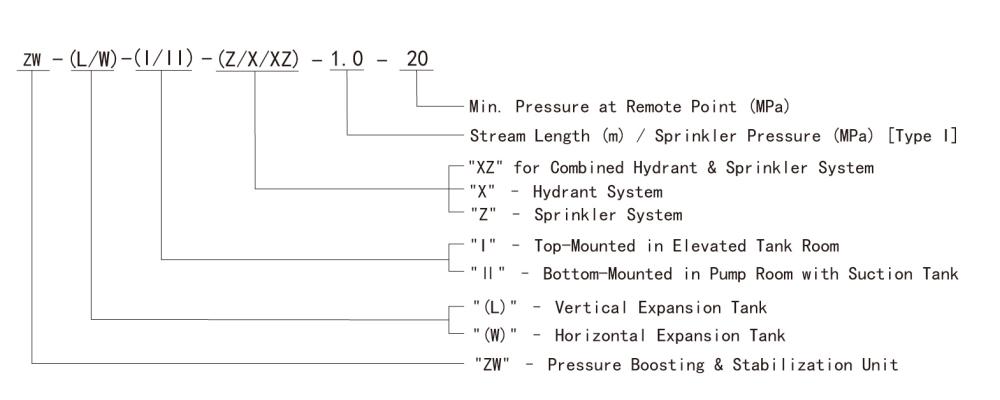
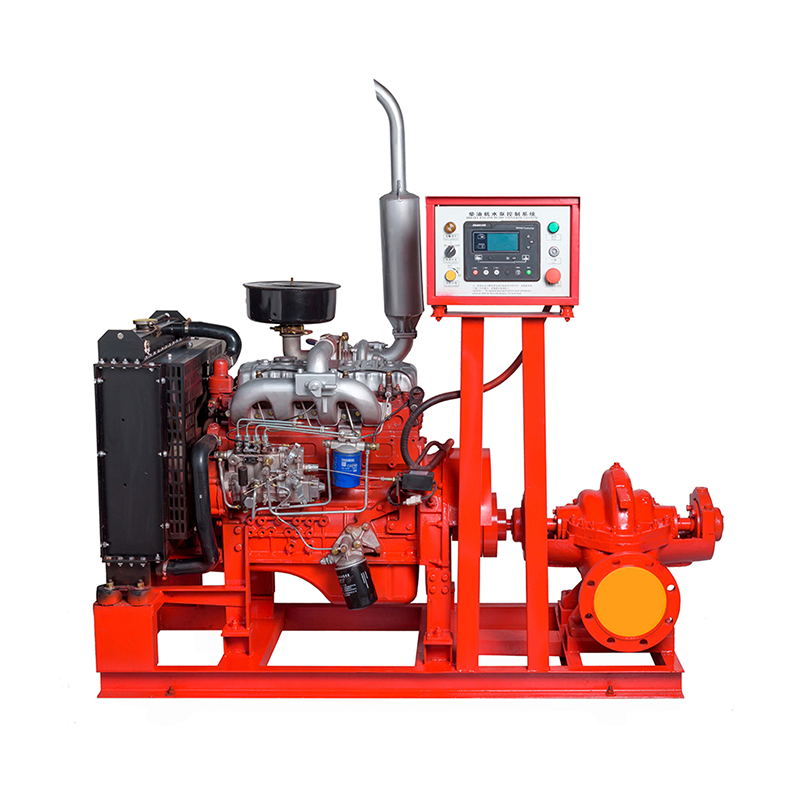
That placement makes it the first responder to tiny pressure losses — and the reason your main pump is not cycling on and off all day. CDUN’s fire protection booster pump and pressure stabilization equipment integrates a booster/jockey pump, diaphragm pressure tank, and intelligent controls into one integrated package, while a complete diesel engine and electric motor driven fire pump set ships the jockey pump as a standard component alongside the main pumps, controller, and valves — a clear illustration of how fire pump set components fit together.
Why Your Fire System Needs a Jockey Pump
5 Reasons Every Fire Pump Set Should Include a Jockey Pump
- It prevents nuisance starts of the main pump. Every automatic start stresses the main motor or diesel engine. A jockey pump absorbs the small losses that would otherwise wake the big pump.
- It reduces wear and extends main-pump life. Fewer starts mean fewer thermal and mechanical cycles on your most expensive asset.
- It compensates for normal leakage and thermal contraction. Long pipelines lose a little pressure to seal weepage and temperature swings; the jockey pump quietly replaces it.
- It holds the required standing pressure for code compliance. Standards such as NFPA 20 and NFPA 25 expect the system to stay pressurized and ready, and the jockey pump is how that is maintained day to day.
- It keeps the system in a stable, ready condition. The main pump starts only for real demand, so when a fire happens, it meets a system that is already at target pressure.
What Happens When There Is No Jockey Pump
Without a jockey pump, every small leak or temperature change drops system pressure until the main pump starts — often dozens of times a day. That leads to motor burnout, diesel battery drain, false alarms, and premature failure of the very pump you depend on during a fire. Worse, by the time a real fire occurs, the main pump may already be fatigued from needless cycling. For any commercial, industrial, or high-rise system, leaving it out is a false economy your business will pay for in downtime and replacement costs.
How a Jockey Pump Works (Step by Step)
The operation is simple by design, because it has to run unattended for years. Here is the typical cycle your system goes through between fire events:
The Typical Jockey Pump Cycle
1. Pressure sensing. A calibrated pressure switch or transmitter continuously reads the pressure in the fire main. Two set points matter: the start pressure (slightly below normal) and the stop pressure (normal standing pressure).
2. Automatic start. When a minor leak or temperature change drops pressure below the start set point, the controller energizes the jockey pump — no operator required.
3. Pressure top-up. The small pump adds just enough flow to bring the system back to the stop pressure, covering ordinary leakage without ever trying to deliver fire flow.
4. Automatic stop. Once normal pressure returns, the jockey pump switches off and waits. The main fire pump never starts unless demand exceeds the jockey pump’s small capacity.
Mechanically, most jockey pumps are compact single-stage pump units — end-suction or inline centrifugal designs chosen for smooth, low-flow operation. Many modern pressure-maintenance packages add variable frequency drives (VFDs) in pumps to hold pressure within a very tight band (CDUN’s ZW series stabilizes to within ±0.01 MPa), which reduces starts even further and saves energy.
Jockey Pump vs Fire Pump: What’s the Difference?
Buyers often confuse the two because both live in the same pump room, but their roles could not be more different. The jockey pump is the system’s caretaker; the main fire pump is its emergency responder. For the full automatic start-up sequence of the main unit, see how a diesel fire pump works.
Side-by-Side Comparison
| Feature | Jockey Pump (Pressure Maintenance Pump) | Main Fire Pump |
|---|---|---|
| Primary job | Holds standing pressure; tops up minor losses | Delivers full fire flow & pressure during a fire |
| Size & power | Small (typically 0.75–7.5 kW / 1–10 hp) | Large (tens to hundreds of kW) |
| When it runs | Automatically for small pressure drops | Only on real fire demand or code test |
| Flow contribution | Minimal (covers leakage only) | Full rated flow (GPM / L/s) |
| Typical driver | Electric motor (often VFD-controlled) | Electric and/or diesel engine |
| Starts per day | Many (dozens of short cycles) | Few (tests + real events) |
The Key Takeaway
You do not choose one or the other — you need both. The main fire pump delivers the flow and pressure a fire demands; the jockey pump keeps the system primed so the main pump starts only when it must. Remove the jockey pump and you turn every tiny pressure loss into a main-pump event.
What Size Jockey Pump Do You Need? (Sizing Rules)
Sizing a jockey pump is about leakage, not fire flow. Oversize it and it fights the main pump; undersize it and the main pump still cycles. Use these rules of thumb, then confirm the final selection with a fire protection engineer:
| Sizing rule | Typical guidance | Why it matters |
|---|---|---|
| Flow | ~1% of the main pump’s rated flow, never below system leakage | Covers normal leakage without pretending to be the main pump |
| Start pressure | ~10% below the system’s normal standing pressure | Prevents the main pump from starting for trivial losses |
| Stop pressure | At the system’s normal (churn) standing pressure | Returns the system to its code-required ready condition |
| Driver | Electric motor; VFD preferred for tight control | Smooth, frequent starts without shock or waste |
| Quantity | One per fire pump set; add standby for critical sites | Redundancy for sites that cannot afford downtime |
Where Is a Jockey Pump Used?
Any protected premises with a fire pump benefits from a jockey pump. Common applications include commercial buildings and shopping malls, high-rise offices and hotels, industrial plants and warehouses, hospitals, data centers, airports and ports, and municipal or civil-defense fire networks. Essentially, wherever a fire pump series installation serves sprinklers, hydrants, or standpipes, a jockey pump should be part of the design.

How to Maintain a Jockey Pump
Testing Frequency
Under NFPA 25, the jockey pump is generally exercised as part of the fire pump weekly inspection (the controller and system are checked weekly, with monthly and annual flow tests focused on the main pump). Because the jockey pump runs frequently, the most valuable check is simply confirming it is not short-cycling and that its pressure set points are correct. Log every start, stop pressure, and any alarm so your records are inspection-ready.
What to Watch During Inspections
- Short-cycling: starting and stopping more than a few times an hour usually means a leak or a mis-set pressure band.
- Pressure band drift: if the stop pressure creeps down, the system may be losing its ready condition.
- Leaks at the pump or seal: weeping at the mechanical seal is an early failure signal.
- Unusual noise or heat: cavitation or bearing wear shows up as vibration or hot spots.
- Controller and backup power: for engine-driven sets, confirm the jockey’s control and backup power are sound.
5 Signs Your Jockey Pump Is Failing
- It short-cycles constantly. Rapid on/off means it can no longer hold pressure against system leakage.
- The main fire pump starts for no obvious reason. A weak jockey pump lets pressure fall to the main pump’s start point.
- Pressure will not reach the stop set point. A worn impeller or seized check valve reduces top-up capacity.
- You see water at the seal or coupling. Mechanical-seal failure is a clear “replace soon” signal.
- Alarms or breaker trips during routine checks. Electrical or motor faults should be addressed before they become a fire-event failure.
Jockey Pump Sizing & Maintenance Quick-CheckUse this at-a-glance reference during specification or inspection:
Tip: Pair this with CDUN’s ZW Series pressure stabilization equipment for ±0.01 MPa control. |
FAQs
What size jockey pump do I need for my fire system?
As a rule of thumb, size the jockey pump flow at about 1% of the main fire pump’s rated flow, but never below your system’s normal leakage rate; set the start pressure roughly 10% below the system’s standing pressure and stop at normal. Confirm the final selection with a fire protection engineer and your local code.
What pressure should a jockey pump be set at?
The jockey pump should start when system pressure drops about 10% below the normal standing (churn) pressure and stop when normal pressure is restored. Tighter bands are possible with VFD control. Correct set points are what keep the main fire pump from nuisance starting.
How often should a jockey pump be tested?
The jockey pump is checked as part of the weekly fire pump inspection under NFPA 25, with monthly and annual flow tests focused on the main pump. Because it runs often, the key is verifying it is not short-cycling and that its set points hold. Keep a dated log for inspectors and insurers.
Can a jockey pump replace the main fire pump?
No. A jockey pump only covers minor leakage at very low flow; it cannot deliver fire flow or pressure. The main fire pump (electric and/or diesel) is required to meet the system’s rated demand during a fire. The two are complementary, not interchangeable.
What is the difference between a jockey pump and a pressure maintenance pump?
They are the same device. “Pressure maintenance pump” is the formal engineering term, while “jockey pump” is the common industry name. Both describe the small automatic pump that maintains standing pressure in a fire protection system.
Conclusion
A jockey pump is the quiet guardian of your fire protection system: a small pressure maintenance pump that holds standing pressure, prevents needless main-pump starts, and keeps your system ready for the moment it truly matters. Now that you know what is a jockey pump in a fire system, where it sits, how it works, and how to size and maintain it, the next step is matching the right unit to your project.
Need the Right Jockey Pump for Your Fire System?Talk to CDUN Pump’s fire protection engineers for a free, project-specific jockey pump and fire pump set sizing. |