Skip to content

When you are specifying a centrifugal pump for a new build, retrofit, or expansion, one decision shapes almost everything else: split case pump vs end suction. Both move water and process fluids with the same centrifugal principle, yet they differ sharply in cost, footprint, serviceability, and the flow ranges they handle best. If you have been weighing end suction vs split case pump, this guide gives you a clear, practical framework so your team can shortlist the right unit without overpaying or under-specifying. You will learn exactly when an end suction centrifugal pump is the smarter buy, and when a split case pump earns its higher price through efficiency and uptime.
What Is the Difference Between a Split Case and an End Suction Pump?
Before you compare price sheets, it helps to understand the two casing designs, because the casing is what drives maintenance, footprint, and flow capacity. Here is the short version your procurement team needs.
End Suction Pump
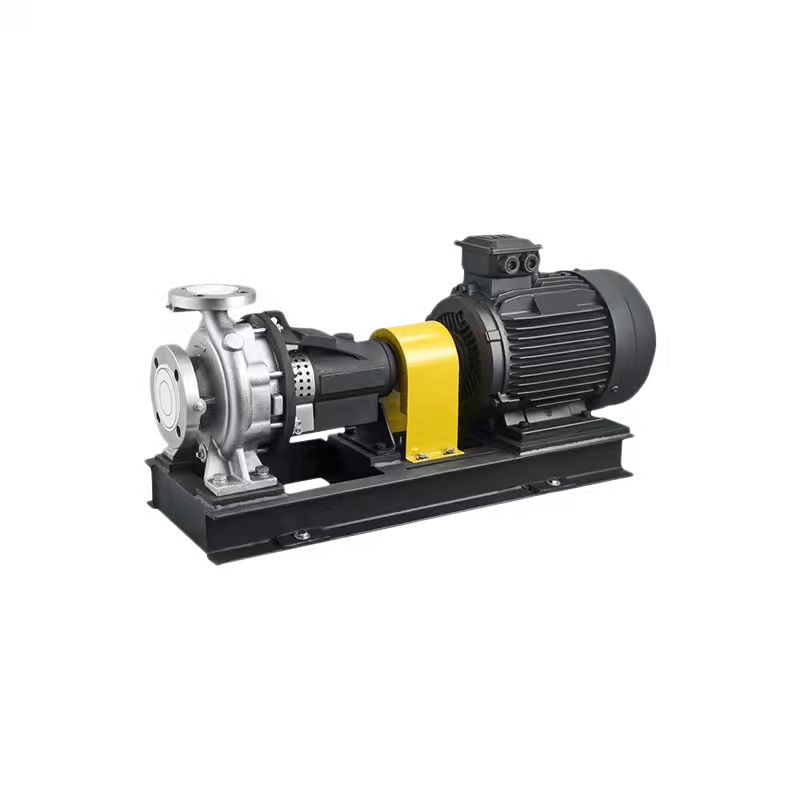
An end suction centrifugal pump draws liquid in axially through a suction nozzle on the end of the casing, then discharges at 90 degrees through the top. The impeller sits on a single shaft, so the wet end is compact and the whole unit is light enough to drop into a tight mechanical room or skid. For your business, that simplicity means lower installation cost, faster commissioning, and straightforward back pull-out service when a seal or bearing eventually needs attention.
If you want the full teardown, our end suction pump working principle guide walks through each component and the most common type configurations.
Split Case Pump
A horizontal split case pump uses a volute that is bolted together along a horizontal centerline. Lift the top half and you can reach the impeller, bearings, and seal without breaking the piping — a major service advantage on critical lines. Most split case units are also double suction pumps: liquid enters both sides of the impeller, balancing axial thrust and enabling very high flow. That double-suction hydraulics is why a split case pump dominates municipal water networks, power-plant cooling, and large fire-protection systems.

| Feature | End Suction Pump | Split Case Pump |
|---|---|---|
| Casing design | Single volute, foot-mounted; impeller serviced from the rear | Horizontally split volute; top half lifts off without disturbing piping |
| Suction type | Single suction (liquid enters one side of impeller) | Double suction (enters both sides) — also called a double suction pump |
| Typical flow range | Up to ~4,000 m³/h (low-to-medium) | Up to ~20,000 m³/h (high flow) |
| Typical head range | Up to ~160 m | Up to ~200 m+ (higher head models available) |
| Efficiency | Good; best in low-to-medium duty | Higher at high flow thanks to double-suction hydraulics |
| Footprint & weight | Compact, lighter, easier to fit | Larger, heavier, needs more floor space |
| Maintenance | Back pull-out service; simple | Top casing removes for inspection; larger components |
| Upfront cost | Lower capex | Higher capex |
| Best fit | Buildings, HVAC, light industrial, small irrigation | Municipal networks, power cooling, fire protection, flood control |
Why Does a Split Case Pump Cost More Upfront?
The sticker price gap between the two designs is real, but it is not the whole story. Here is what your finance and operations teams should weigh.
Higher Efficiency and Lower Lifecycle Cost
On high-flow duties, a split case pump runs closer to its best efficiency point for more of the operating curve, so it burns less power per cubic meter moved. Over a 15–20 year service life, that energy saving — plus faster top-casing service that keeps downtime short — often repays the higher capital cost. If your line runs continuously, it helps to understand how long a centrifugal pump can run continuously before you size for uptime and spare parts.
End Suction: Lower Capex, Simpler
An end suction pump needs less metal, fewer machined faces, and a smaller baseplate. For low-to-medium flow where you are not chasing the last percentage point of efficiency, that lower capital cost and simpler build usually win. Your business gets a pump that is cheaper to buy, easier to install, and cheap to keep running.
How Do Their Performance and Flow Ranges Compare?
End Suction Fits Low-to-Medium Flow
For most commercial and light-industrial systems — a building water supply, an HVAC chilled-water loop, or a small irrigation set — an end suction centrifugal pump covers the duty comfortably. Typical envelopes run up to roughly 4,000 m³/h and 160 m of head, which is more than enough for the majority of B2B projects.
Split Case Fits High Flow and Head
When your specification climbs past those envelopes, a high flow water pump based on a double-suction split case design earns its place. With capacities reaching toward 20,000 m³/h and head into the 200 m range, split case units are the workhorses behind municipal transmission mains, power-plant cooling circuits, and large industrial transfer lines where an end suction pump would simply be oversized or unable to deliver.
5 Selection Rules: Split Case or End Suction?
Use these five rules as a centrifugal pump selection checklist. If you answer “yes” to the split case conditions, lean that way; otherwise an end suction pump is almost always the pragmatic choice.
Quick Selection Cheat Sheet
|
If pump orientation also constrains your layout, our horizontal vs vertical centrifugal pump comparison helps you decide between a floor-mounted and an inline or vertical configuration alongside the split case vs end suction question.
Which Applications Use Split Case vs End Suction?
End Suction Common Uses
End suction pumps are the default across distributed, lower-flow systems: HVAC and chilled-water loops, building water supply and booster sets, light industrial circulation, and small-to-mid irrigation. Their compact footprint and low cost make them the safe, repeatable choice for contractors and OEMs shipping skid packages.
Split Case Common Uses
Split case pumps anchor the big, continuous systems: municipal water networks and transmission mains, power-plant cooling water, bulk industrial transfer, UL/FM fire protection packages, and flood-control stations. When the duty is large, critical, and always-on, the double-suction design and easy top-casing service justify the investment.
Common Mistakes When Choosing Between Them
- Buying on sticker price alone. A cheap end suction pump on a high-flow line can cost more in energy and downtime than a split case over ten years.
- Oversizing “just in case.” A pump running far from its best efficiency point wastes power and wears faster — match the curve to real demand.
- Ignoring service access. If you cannot break piping for maintenance, the split case top-casing design saves you later.
- Confusing flow and head. High head at modest flow may still favor end suction; it is total duty point, not one number, that decides.
- Skipping certification. For fire protection, confirm UL/FM listing before you specify — not every split case or end suction unit qualifies.
FAQs
When should your business choose a split case pump instead of an end suction pump?
Choose a split case pump when your duty point sits above roughly 4,000 m³/h, when you need high head on a large system, when the line runs continuously and efficiency drives lifecycle cost, or when maintenance must happen without breaking the connected piping. For low-to-medium flow with tight budget and footprint, an end suction pump is usually the better buy.
Is a split case pump always more efficient than an end suction pump?
No. At low-to-medium flow an end suction pump can match or beat a split case because it runs near its best efficiency point on a smaller, simpler hydraulic. The split case advantage appears at high flow, where double-suction hydraulics stay efficient across a wider part of the curve. Efficiency is duty-point dependent, not design-dependent by default.
Can an end suction pump handle the same flow as a split case pump?
Only up to a point. A large end suction pump can reach several thousand m³/h, but beyond about 4,000 m³/h the split case double-suction design becomes the practical choice for stability, efficiency, and manageable footprint. If your specification clearly exceeds that range, plan for split case.
Which pump is easier and cheaper to maintain — split case or end suction?
Both are service-friendly, but differently. End suction offers simple back pull-out service with small, cheap components. Split case lets you lift the top casing for inspection without disturbing piping, which is invaluable on critical lines, though its parts are larger and costlier. For non-critical, low-flow duty, end suction keeps maintenance spend lowest.
How much more does a split case pump cost than an end suction pump?
Expect a split case pump to carry a meaningfully higher upfront cost — more castings, a larger baseplate, and double-suction hydraulics. The premium varies with size and materials, but the business case rests on lower lifetime energy and downtime, not on matching the end suction purchase price. Always compare total cost of ownership, not capex alone.
Are split case pumps required for UL/FM fire protection systems?
Not exclusively — UL/FM-listed fire pumps come in end suction, split case, and vertical turbine forms. Split case double-suction units are common for high-flow fire mains because they deliver the required capacity reliably, but the right choice depends on your flow, head, and space. Confirm the listing and the duty point with your supplier before specifying.
Conclusion
The split case pump vs end suction decision is not about which design is “better” — it is about matching duty point, budget, and service reality to the right machine. For low-to-medium flow, tight footprint, and lower capex, an end suction centrifugal pump is the pragmatic default. For high flow, high head, continuous critical service, and easy top-casing maintenance, a horizontal split case pump earns its premium. Run the five selection rules above, and your team will shortlist with confidence instead of guesswork.
Need Help Specifying the Right Pump for Your Project?Send us your flow, head, and duty-point data and our engineering team will return a matched split case or end suction recommendation with a quote — typically within one business day. |