Skip to content

When you are specifying a pump for a building, a municipal line, or an industrial process, one question always comes up: how far can a water pump push water before the pressure simply runs out? The short answer is that physical distance is rarely the real constraint — pump head, pipe size, and friction loss decide it. In this guide we break down what actually limits how far your pump can push water, how to estimate the maximum horizontal distance for your system, and which pump type reaches the farthest. If your business is planning a new water-supply, drainage, or pressure-boosting project, the numbers below will help you size the right unit before you buy.
What Determines How Far a Water Pump Can Push Water?
Two forces decide the reach of any pumping system: the energy the pump adds (its head) and the energy the pipework takes away (friction and elevation). Get these two right and you can predict distance accurately instead of guessing.
Head Is the Real Limit, Not Distance
Water pump head is the height, measured in metres or feet, that a pump can lift water using its available pressure energy. A pump rated at 50 m of head does not “push 50 metres sideways” — it can overcome the equivalent of a 50 m vertical lift. Horizontal runs also consume head through friction, so the pump maximum head is the budget you spend on both elevation and pipe losses. When buyers ask “how far can a water pump push water,” what they really need to know is how much of that head budget is left after friction — and whether a single-stage centrifugal pump or a multi-stage unit is the right base.
Friction Loss Eats Head on Every Long Run
Water dragging along pipe walls loses energy as heat and pressure drop. That loss — friction loss — grows with pipe length, roughness, and flow rate, and it climbs fast at high flow. On a long horizontal line, friction can consume most of your available head long before you run out of physical distance. This is why what limits how far a pump can push water is usually the pipe, not the pump nameplate.
Why Does Pipe Size Matter More Than Pump Power?
It is tempting to solve a weak line by buying a bigger pump. In practice, upsizing the pipe almost always wins. Friction loss falls roughly with the fifth power of diameter, so moving from a 50 mm line to an 80 mm line can cut friction loss by more than 10× at the same flow. A correctly sized end suction pump on an adequately sized pipe will out-reach an oversized pump choking through a narrow line. For your business, that means lower energy bills and a pump that is not working near its limit every hour of the day.

How to Calculate the Maximum Distance for Your Pump
You do not need specialist software to get a usable estimate. Work entirely in head:
- Start with your pump maximum head from the performance curve (for example, 50 m).
- Subtract the static lift — every metre of uphill rise costs 1 m of head.
- Subtract friction loss for your pipe length and diameter at your flow rate.
- Whatever head remains can be “spent” on more horizontal distance; convert it using your pipe’s friction rate (metres of head per metre of pipe).
The table below shows a typical clean-water example so you can see how quickly friction shrinks the reachable pump horizontal distance.
| Parameter | Value | Head used |
|---|---|---|
| Pump maximum head | 50 m | 50 m budget |
| Static lift (uphill) | 8 m | −8 m |
| Friction, 100 m of 80 mm pipe @ 20 m³/h | — | −3 m |
| Remaining head for horizontal run | — | 39 m |
| Reachable horizontal distance @ 0.4 m head/m pipe | ≈ 97 m | −39 m |
Note: real systems also lose head at every elbow, valve, and inlet — budget 10–20% extra so your business is not left short on site.
Pump Head & Horizontal Distance Estimator
Enter your system figures to estimate friction loss and the horizontal distance your pump can still reach. This is an educational estimate — confirm with our engineers before you specify.
5 Factors That Shorten How Far a Pump Pushes Water
Narrow Pipe or Too Many Bends
Small diameter and elbow-count are the most common silent killers of pump distance. Each 90° bend can cost the equivalent of 1–3 m of straight pipe in head, so a twisting line quietly spends your budget before the water gets anywhere.
Uphill Slope (Adds Head 1:1 With Height Gained)
Every metre you rise is one metre of head gone. Pumping to an elevated tank or rooftop is the single biggest fixed cost in the budget, and it cannot be designed away.
High Flow Demand (Friction Rises With Flow Squared)
Doubling flow can roughly quadruple friction loss. If your process runs in peaks, size for the peak — otherwise the pump horizontal distance will collapse exactly when your business needs it most.
Viscous or Solids-Laden Fluid
Dirty water, sludge, or fluids thicker than clean water raise friction and clog impellers. A non-clog submersible sewage pump is built for solids, but even then expect a shorter reach than with clean water.
Undersized or Worn Pump
A pump chosen on price rather than on its curve, or one with worn rings and impeller, simply cannot deliver its rated head. Match the unit to the system, not the other way round, or every distance calculation above becomes optimistic.
What Pump Type Pushes Water the Farthest?
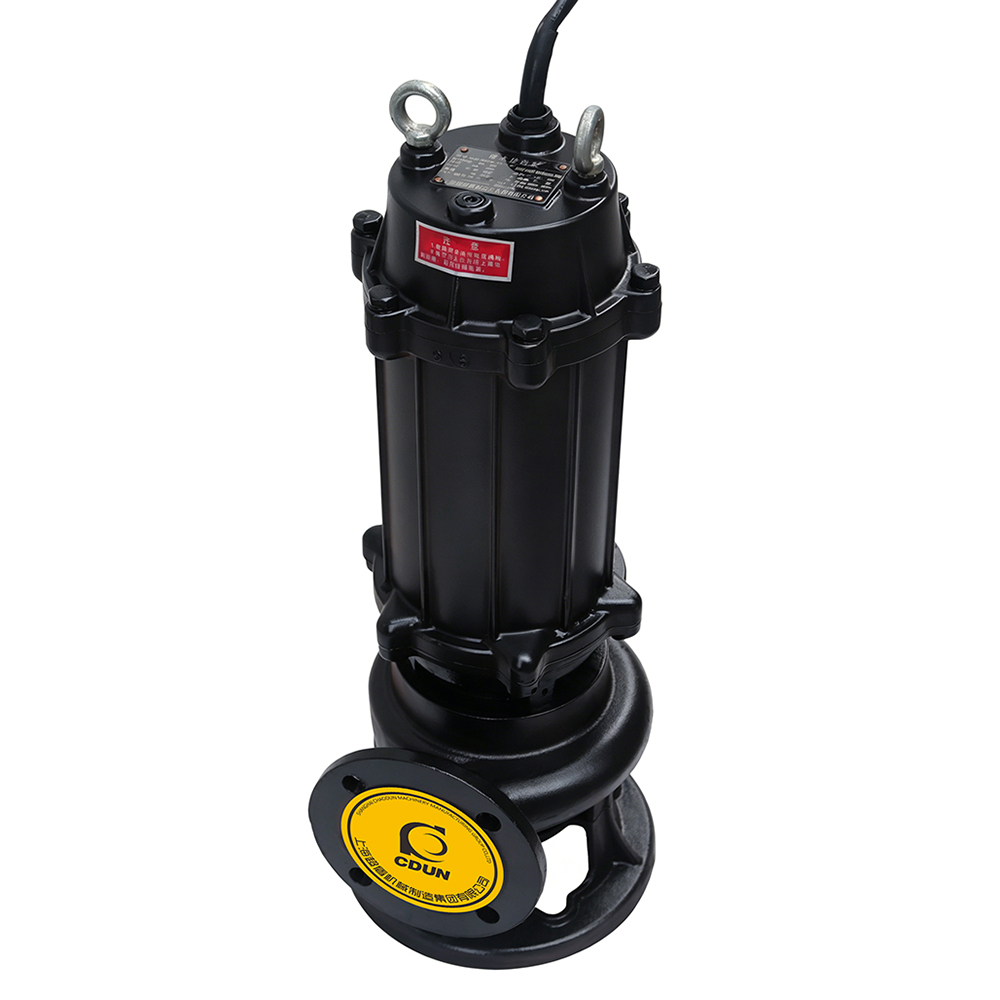
For long reach you want a pump that stacks head efficiently and stays efficient at your flow. Submersibles sit inside the water, avoiding suction-lift limits; understanding how submersible pumps work explains why they stay efficient over long runs.

Multi-Stage Centrifugal and Submersible Pumps
Multi-stage units add head in series, so a multi-stage pump series can reach heads of 200 m or more — ideal for high-rise buildings, boiler feed, and long transfer lines. Buyers also ask how far can a submersible pump push water: with the right head and pipe it can move water for hundreds of metres horizontally in a single stage, and for kilometres when staged with boosters. For continuous duty, check how long a submersible pump runs continuously so your duty cycle matches the unit.
When to Add a Mid-Line Booster Station
Beyond a few hundred metres, one pump hits its shut-off limit. A mid-line booster station — a second pump set partway along the pipe — tops up pressure so the line keeps reaching. For your business this avoids one oversized, inefficient unit and spreads both cost and redundancy across the route.
Common Mistakes That Cut Pump Distance
Most shortfalls are avoidable. The usual errors are: sizing the pump on flow alone and ignoring head; running the smallest pipe the budget allows; stacking elbows instead of planning a straight route; forgetting elevation; and assuming a nameplate rating holds once the impeller wears. Treat head as your true currency, size the pipe first, and verify the curve at your real flow — and your system will reach further than the catalogue guess suggests.
| Specifying a pump for a long water line? Send us your flow, distance, and elevation — our engineers will check the head budget and recommend the right single-stage or multi-stage unit for your project. |
FAQs
How far can a water pump push water horizontally?
There is no single number — it depends on the pump’s head and your pipe. A typical clean-water single-stage pump on an 80 mm line might reach roughly 100 m before friction uses up the head budget; a multi-stage or boosted system can reach hundreds or thousands of metres. The limiting factor is almost always head spent on friction and lift, not the physical length of pipe.
What is pump head, and how does it limit distance?
Water pump head is the pressure energy a pump provides, expressed as the height of water it could lift. Every metre of elevation and every metre of friction loss “spends” part of that head. When the head budget is gone, the water stops moving — so the pump maximum head sets the ceiling on both vertical lift and horizontal distance.
How do I calculate the maximum distance for my water pump?
Convert everything to head: take your pump maximum head, subtract the static lift and the friction loss for your pipe length, diameter, and flow, and spend whatever remains on more horizontal run. Use the estimator above, or our multi-stage pump series page for high-head options.
How far can a submersible pump push water?
A submersible pump avoids suction-lift limits by sitting in the water, so its reach is set by head and pipe like any other pump. In a single stage with the right pipe it can push water hundreds of metres horizontally; with mid-line boosters it scales to kilometres. Because duty matters, also review how long a submersible pump runs continuously before you commit to a duty cycle.
What limits how far a pump can push water?
Five things: narrow or bend-heavy pipe, uphill slope, high flow demand, viscous or solids-laden fluid, and an undersized or worn pump. Pipe friction and elevation are the biggest everyday limits, which is why pipe sizing usually beats simply buying a bigger pump.
Does pipe size really matter more than pump power?
In most long-run cases, yes. Friction loss drops with roughly the fifth power of diameter, so a modest pipe upgrade can reclaim more distance than a much larger pump — at a fraction of the energy cost. Size the pipe first, then choose the pump.
Can I increase the horizontal distance my pump reaches?
Yes. Upsize the pipe, cut bends and valves, lower the flow if peaks allow, and add a mid-line booster station for very long lines. You can also move to a multi-stage unit when the head budget is the bottleneck. Each step recovers head you can spend on more distance.
Conclusion
So, how far can a water pump push water? As far as its head budget allows after elevation and friction — and for most B2B projects, the pipe, not the pump, decides the answer. Size the pipe first, read the curve at your real flow, and stage the head when the line gets long. Your business gets a system that reaches the distance it is specified for, without an oversized, energy-hungry unit.
| Ready to size the right pump? Explore our high-head multi-stage ranges or talk to our engineering team about your distance, flow, and elevation. |