
If you are specifying a pump for a process that cannot stop, the single question that matters is simple: how long can a submersible pump run continuously before something breaks? The short answer is that a correctly sized, continuous-duty submersible pump can run 24/7 for years — typically 8,000 operating hours or more between major services, and 10–15 years of design life. But “can run” and “will run” are two different things, and your business pays the difference every time a pump trips offline.
This guide breaks down the real runtime limits, why submersibles outlast most dry-installed pumps, what quietly shortens their life, and how to choose a unit that survives continuous duty. We write from an engineering and standards perspective (IEC 60034 duty ratings, IP68 ingress protection, GB/T 24674-2009), not brand hype, so you can make a defensible procurement decision.
How Long Can a Submersible Pump Run Continuously?
A submersible pump built for continuous duty carries an S1 rating under IEC 60034, meaning it is designed to run at full load with no scheduled stop. In practice, a well-selected unit runs uninterrupted for months at a time. Manufacturers express this two ways: operating hours and design life. A quality sewage submersible pump is typically rated for 8,000+ hours of continuous operation and a design life of 10–15 years when the duty point, media, and cooling conditions are correct.
The catch is “when correct.” A pump forced to run above its rated duty point, starved of cooling liquid, or fed abrasive media will not reach those numbers. Continuous runtime is an outcome of sizing and installation, not a free feature of the product category.
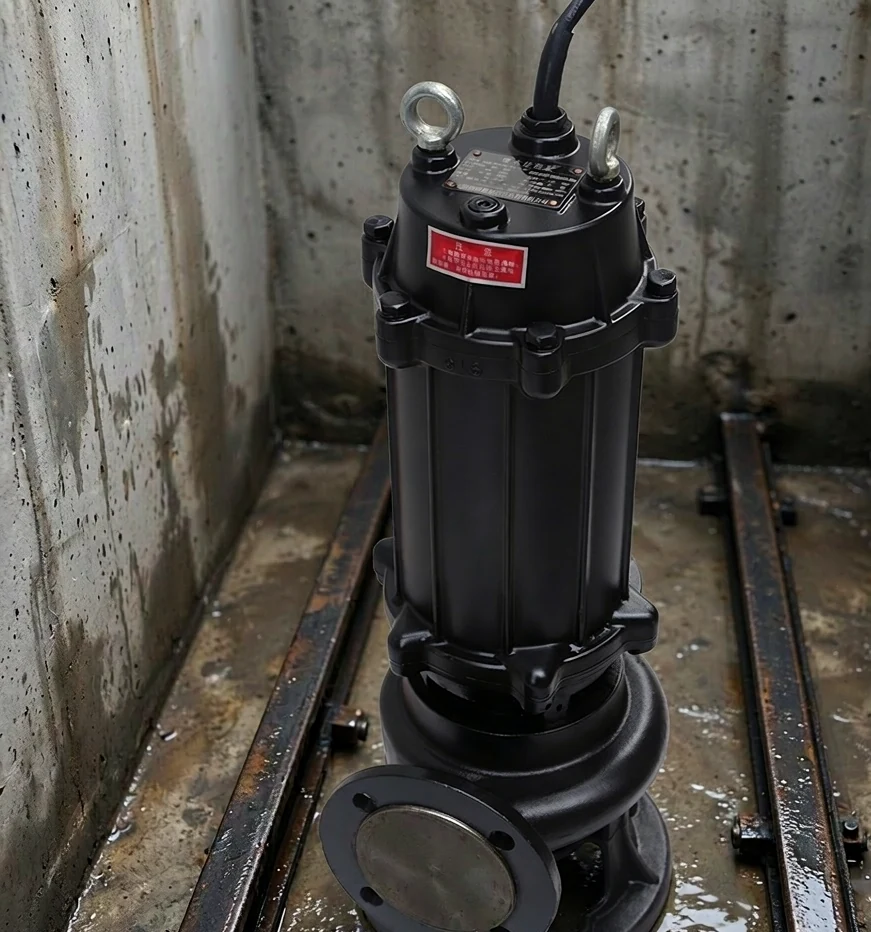
Why Can Submersible Pumps Run So Long?
Submersible pumps have a structural advantage over dry-installed designs: the motor sits inside the very liquid it moves. For the full sealed-motor design, see how a submersible pump works. That single fact removes the three biggest enemies of pump life — heat, priming failure, and shaft-seal exposure.
Compare this with an end-suction pump, which is air-cooled, must be primed, and relies on a mechanical seal running against air on one side. A submersible, by contrast, is flooded and sealed. The table below shows the design factors that let a submersible pump run for years without a shutdown.
| Design factor | How it protects your runtime |
|---|---|
| Submerged motor cooling | The pumped liquid carries heat away, so the motor stays cool even at 100% load — the core reason continuous duty is possible. |
| IP68 sealed construction | Per IEC 60034 / EN 60529, the motor is protected against continuous submersion, blocking water and grit from the windings. |
| S1 continuous-duty motor | The winding insulation and thermal design assume non-stop operation, not intermittent starts. |
| No priming required | No air lock, no lost prime, no dry-run event from a brief vacuum loss — a common dry-pump killer. |
| Simple single-stage hydraulics | Fewer wearing parts in the flow path means fewer things to fail during long runs. |
What Shortens a Submersible Pump’s Runtime?
Most premature submersible failures are self-inflicted at the specification stage. Understanding the submersible pump duty cycle — how long it may run versus how long it must rest — is the difference between a unit that lasts a decade and one that burns out in a season. The enemies below all attack runtime directly.
| What shortens runtime | What actually happens | Typical impact |
|---|---|---|
| Undersizing / overload | Running far right of the curve overheats the motor and overloads the seals. | Life cut by 50% or more. |
| Dry running | No liquid = no cooling; the mechanical seal burns within minutes. | Seal failure, immediate leak path to motor. |
| Abrasive / corrosive media | Sand, slurry or low-pH waste wears the impeller and seal faces. | Gradual efficiency loss, then seizure. |
| Frequent starts (duty cycle) | Each start spikes inrush current and thermal stress on the windings. | An S3-intermittent unit fails if run as S1. |
| Clogging by solids / fibers | Blockage forces the motor to work harder against a closed outlet. | Overload trip, then winding damage. |
How to Make a Submersible Pump Last Longer
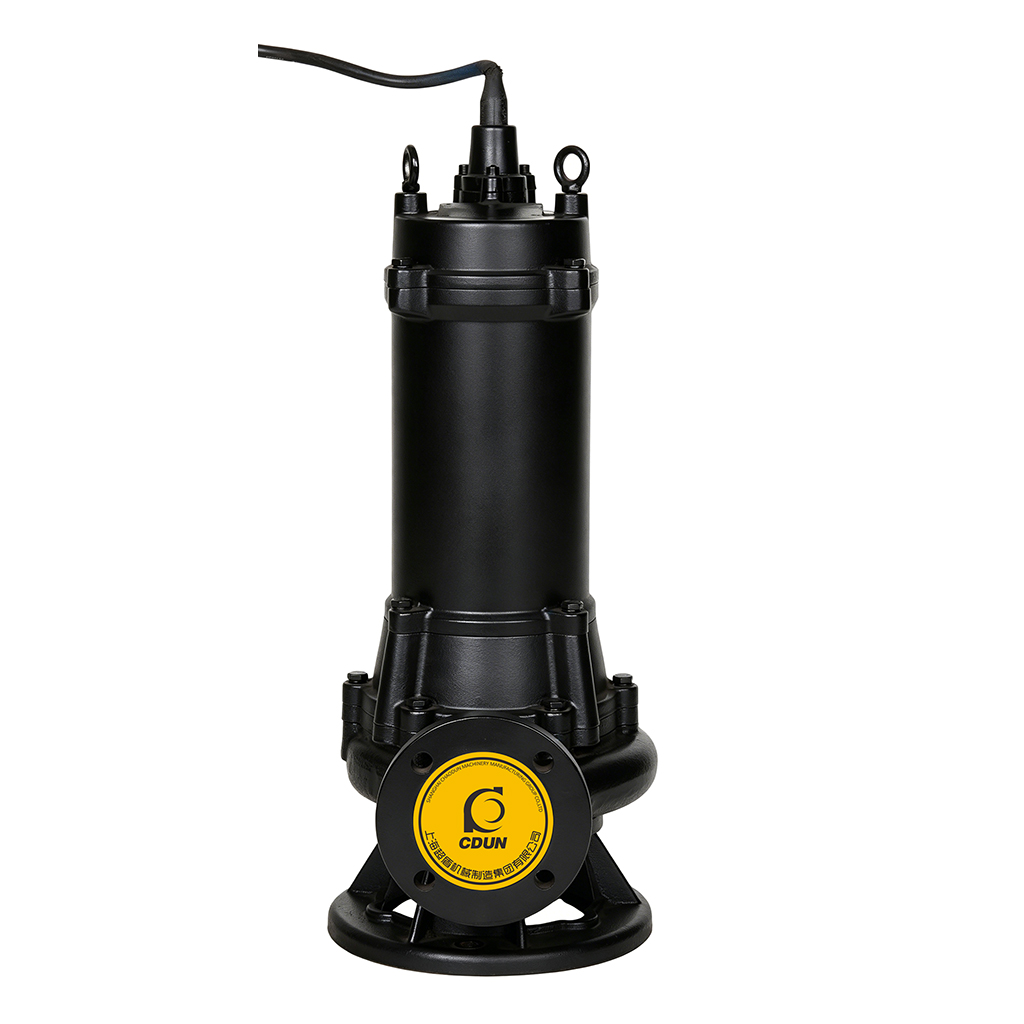
Longevity is engineered in at purchase and protected at commissioning. Start with a unit whose hydraulic and motor ratings match your real duty point — not the catalogue peak. For solids- and fiber-laden wastewater, a non-clog sewage submersible pump with a large-passage impeller and dual tungsten-carbide mechanical seals is the baseline for uninterrupted service, because it removes the clog-and-overload failure path.
Where long fibers or ragging are the problem, a submersible sewage pump with a cutter mechanism pre-shears strings and rags before they reach the impeller, protecting both the seal and the motor over long cycles. Both designs pair with leakage, overload, and over-temperature protection that trips the unit safely instead of letting it cook.
Operationally, the highest-leverage habits are simple: fit reliable level control so the pump never runs dry, keep the motor fully submerged within its rated depth, and follow a planned inspection routine. Our sewage pump installation guide walks through the coupling, sealing, and commissioning steps that protect runtime from day one.
Signs Your Pump Is Overworking
Catching signs of well pump failure early turns a planned maintenance window into a saved production line. The same warning signals apply to any continuous-duty submersible, whether it sits in a well, a wet well, or a process pit. If you see any of these, your unit is already past its comfortable duty point.
| Warning sign | Likely cause | What to do |
|---|---|---|
| Rapid on/off cycling | Level switch set too tight, or duty cycle exceeded | Widen dead-band; confirm S1 rating. |
| Breaker trips / thermal cutoff | Overload, low voltage, or dry-run protection | Check amp draw, supply, and water level. |
| Flow or pressure drops | Clogged impeller, worn seal, or worn hydraulics | Inspect via guide-rail lift; clear or rebuild. |
| Motor or cabinet runs hot | Overload, phase loss, or poor cooling | Verify 3-phase balance and submersion depth. |
| Unusual noise or vibration | Cavitation, bearing wear, or debris | Schedule inspection before failure. |
| Rising energy bills | Efficiency loss from wear or clogging | Benchmark kWh vs. nameplate; service. |
Two questions come up constantly here. If your pump keeps shutting off, it is almost always a protection device doing its job — thermal cutoff, leakage probe, or phase-loss relay — and the right response is to find the underlying overload or dry-run condition, not to bypass the trip. If the pump runs but delivers no water, suspect a clogged impeller, a closed/disconnected discharge, or a failed check valve upstream.
How to Choose a Pump for Continuous Duty
Specifying for 24/7 operation means reading the nameplate for duty class, not just flow and head. Confirm an S1 continuous-duty motor, IP68 ingress protection, mechanical-seal construction suited to your media, and built-in leakage/over-temperature protection. Match materials to the liquid — cast iron for municipal waste, stainless steel or wear-resistant alloy for corrosive or abrasive duty — and keep the unit within its rated submersion depth so cooling holds.
For applications where the liquid is above grade or where you cannot guarantee submersion, a self-priming pump is often the safer choice, because it is built for air-handling starts rather than continuous flood. Choosing the right architecture up front is cheaper than a mid-project failure.
Continuous-Duty Readiness Checklist
Tick each box that matches your application. If you cannot tick most of them, your current setup is at risk under 24/7 operation — and a short specification call will save you a shutdown later.
| My motor carries an S1 (continuous-duty) rating, not S2/S3. | |
| Ingress protection is IP68 for the installed depth. | |
| Reliable level control prevents dry running. | |
| Impeller/cutter suits my solids and fiber load. | |
| Materials match the media pH and abrasion. | |
| Leakage / overload / temperature protection is fitted. |
| Boxes ticked | Your readiness for continuous duty |
|---|---|
| 5–6 | Your business is set for long, uninterrupted runs. |
| 3–4 | Workable, but close the gaps before 24/7 service. |
| 0–2 | Re-specify — current setup will fail under continuous load. |
FAQs
Can a well pump run continuously?
Yes. Most residential and commercial well pumps are submersible motors rated S1 for continuous duty, so they are built to run non-stop. The real limit is the well itself: if the pump draws water faster than the aquifer recovers, the level drops, the pump loses cooling, and dry-run protection shuts it down. Size the pump to the well’s sustainable yield and it will run continuously without issue.
How many hours does a submersible pump last?
A properly specified continuous-duty submersible pump typically delivers 8,000–20,000+ operating hours and a 10–15 year design life. Real-world submersible pump lifespan depends on duty point accuracy, media cleanliness, cooling, and maintenance. Units pushed past their curve or run dry can fail in hundreds of hours, while well-matched, protected pumps routinely exceed the upper range.
What is the duty cycle of a submersible pump?
Duty cycle describes how long a pump may run versus rest. An S1-rated submersible pump continuous duty unit runs 100% of the time with no rest. An S2 (short-time) or S3 (intermittent) unit is limited to a percentage of the cycle — for example 60% ED means 6 minutes run per 10. Running an S3 pump as if it were S1 is a common cause of early burnout, so always read the duty class on the nameplate.
What are the signs of well pump failure?
The earliest signs of well pump failure are loss of pressure or flow, the pump cycling on and off more often than before, spitting air, a steady rise in electricity bills, and the motor or control cabinet running hot. Any one of these means the unit is past its comfortable duty point — investigate the cause (overload, clog, low yield, voltage) before it becomes a no-water emergency.
Why does my submersible pump keep shutting off?
Repeated shutdowns are almost always a protection device reacting to a fault: thermal cutoff from overload, a leakage probe tripping on seal weep, phase-loss or low-voltage relay, or dry-run protection when the level drops. The fix is to find and remove the underlying condition — never bypass the trip, which turns a safe shutdown into burnt windings.
Can a submersible pump run dry?
No, and it should never be allowed to. Without surrounding liquid there is no motor cooling and the mechanical seal overheats within minutes, opening a path for water into the motor. Continuous-duty installations must include level control (float, electrode, or transducer) that stops the pump before it uncovers.
Conclusion
A submersible pump can run continuously for years — but only when the motor is S1-rated, the seals and materials match the media, cooling is guaranteed by full submersion, and protection devices are in place. The submersible pump lifespan you get is decided at the specification table, not in the field. Get those choices right and 8,000+ uninterrupted hours is the baseline, not the lucky case.
|
Need a pump that runs 24/7 without failure? Our engineers will size a continuous-duty submersible pump to your exact flow, head, and media — and flag the failure risks before they cost you downtime. |
|
Explore CDUN’s continuous-duty submersible pumps See the non-clog and cutter-mechanism designs built for uninterrupted operation across municipal, industrial, and building drainage. |