
If your business moves water, wastewater, or slurry from a pit, well, or tank that sits below your pump, you have likely hit the same wall before: a standard pump loses its prime, pulls air into the line, and simply stops delivering. That is exactly the problem a submersible pump is built to solve. But how does a submersible pump work, and why do so many municipal, industrial, and building operators trust one to keep their water systems running? In this article you will walk through the submersible pump working principle step by step, see the main submersible pump parts, compare it with a centrifugal pump, review the common types of submersible pumps, and learn how to choose the right unit for your duty — without drowning in jargon.
What Is a Submersible Pump?
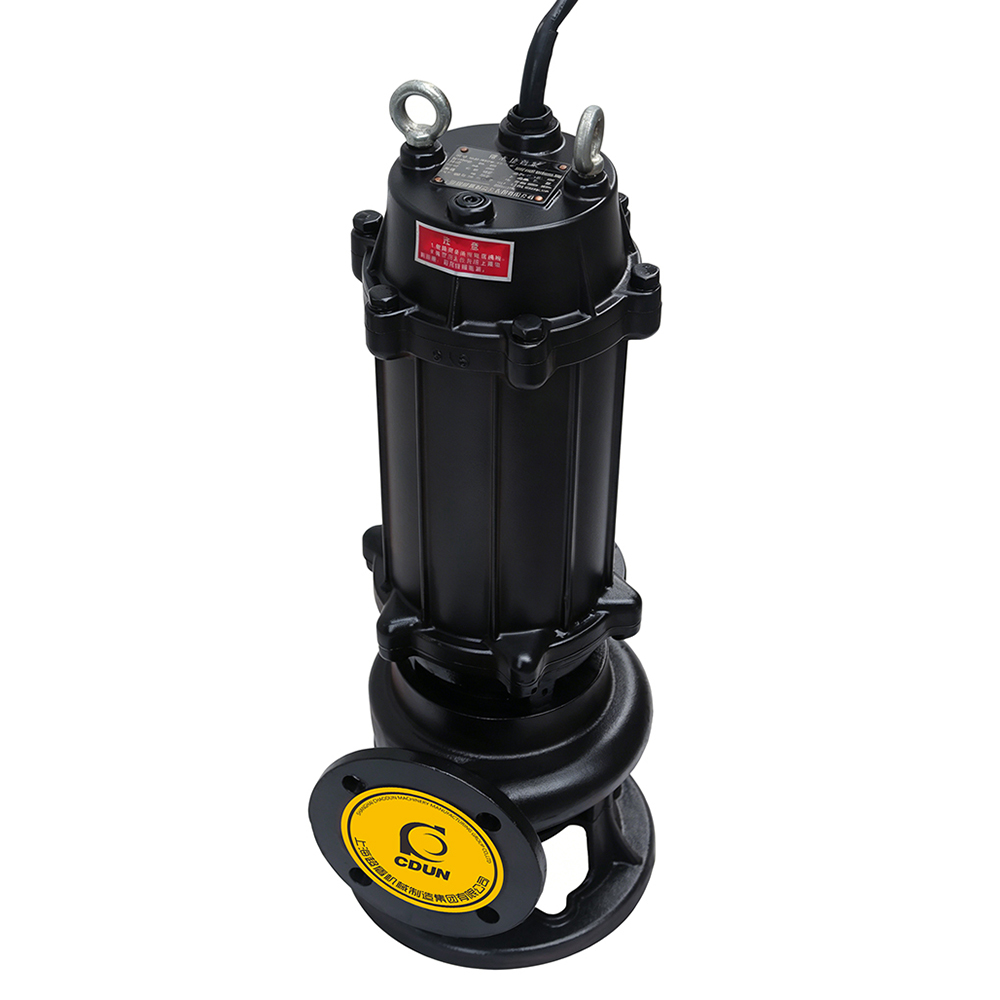
A submersible pump is a sealed, fully watertight unit in which the electric motor and the pump body are built into a single housing that is lowered directly into the fluid it moves. Because the entire assembly sits below the waterline, it pushes liquid out under positive pressure rather than sucking it up from above. For your business, that means no lost prime, no long suction line that can leak or cavitate, and far less unplanned downtime. A typical example is CDUN’s non-clog sewage submersible pump.
How Does a Submersible Pump Work? (Step by Step)
So, how does a submersible pump work in practice? The submersible pump working principle is built around a sealed motor driving an impeller while fully submerged. Here is exactly what happens inside your unit from the moment you switch it on:
- Sealing and submersion. The motor housing is hermetically sealed — typically to IP68 — using mechanical seals and an oil chamber, so water never reaches the windings. You lower the pump into the pit, well, or tank.
- Motor energizes the impeller. Once powered, the motor rotates the impeller at speed. On models such as CDUN’s submersible sewage pump with cutter mechanism, a cutting disc first reduces fibers and solids before they reach the impeller.
- Centrifugal action builds pressure. The spinning impeller flings liquid outward, and the volute casing converts that velocity into pressure — the same centrifugal working principle used by surface pumps, but now happening underwater.
- Positive-pressure discharge. Because the pump sits inside the fluid, it pushes liquid up the discharge pipe under positive pressure. This is why a submersible pump can lift water from far deeper than a suction-limited surface pump.
- Continuous, monitored operation. Float switches or level sensors control start and stop, while protection systems shut the unit down on leakage, overload, or over-temperature — so it can run unattended.
This is the short answer to “how submersible pump works”: a sealed underwater motor turns an impeller that pushes fluid out under pressure, with no suction priming required.
What Are the Main Parts of a Submersible Pump?
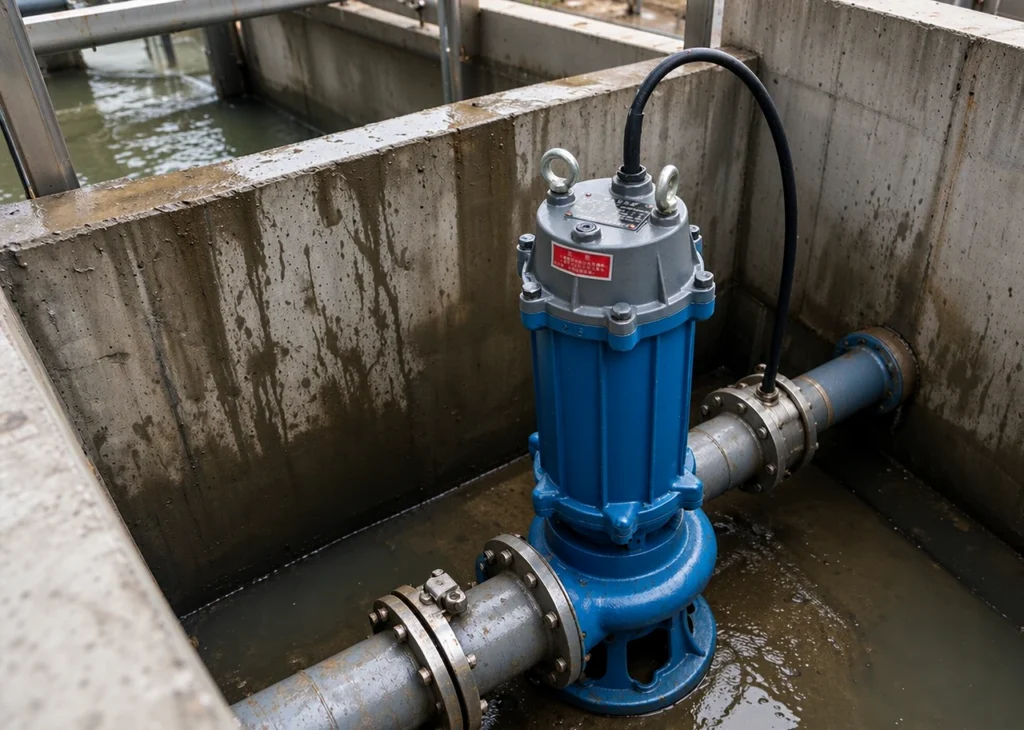
Every unit shares a common set of submersible pump parts. Understanding them helps your team specify, maintain, and troubleshoot more confidently — and it is the clearest way to read a submersible pump diagram when you review a manufacturer’s drawing:
| Part | Function | Why it matters for your business |
|---|---|---|
| Pump casing / volute | Houses the impeller and converts velocity to pressure | Cast iron or stainless construction sets wear life in abrasive wastewater |
| Impeller | Spins to move and pressurize fluid | Channel or vortex design determines clog resistance |
| Electric motor | Drives the impeller, fully sealed (IP68) | Efficiency rating drives your energy cost over the unit’s life |
| Mechanical seals + oil chamber | Block fluid from reaching the motor | Dual tungsten-carbide seals extend service life to 8,000+ hours |
| Discharge outlet & coupling | Connects to pipe; rail coupling allows lift-out | Rail systems let one technician service the pump without entering the pit |
| Float switch / sensors | Detect level and control start / stop | Prevents dry-run and frequent start-stop wear |
| Cutter disc (on some models) | Shreds fibers and solids before the impeller | Eliminates the most common clog cause in sewage duty |
Why Are Submersible Pumps More Efficient Than Surface Pumps?
When you line up a submersible vs centrifugal pump, the differences are not just about where the unit sits — they flow straight through to energy use, reliability, and total cost of ownership. A submersible unit is itself a centrifugal pump, but by living inside the fluid it removes the weakest link of a surface setup: the suction line.
| Factor | Submersible pump | Surface / centrifugal pump |
|---|---|---|
| Priming | None required — always flooded | Needs a primed suction line; loses prime with air |
| Energy use | Pushes fluid under positive pressure; less head loss | Must overcome suction lift, wasting energy |
| Cavitation risk | Very low (no suction side) | Higher on long or high suction lifts |
| Noise & footprint | Quiet, underground; saves building space | Above-ground, noisier, needs a pump house |
| Best fit | Wells, pits, tanks, sewage, slurry | Clean-water transfer with flooded suction |
If your suction line is not always flooded, our self-priming pump working principle guide is also worth comparing — but for deep or dirty duties, submersible wins on efficiency. For a wider view of centrifugal designs, see our horizontal vs vertical centrifugal pump comparison.
What Types of Submersible Pumps Exist?
The main types of submersible pumps are defined by the fluid they handle and the duty they face. Getting this right up front saves your project from retrofits later:
| Type | Best for | CDUN example |
|---|---|---|
| Submersible sewage pump | Municipal & building wastewater with solids / fibers | non-clog sewage submersible pump |
| Cutter / grinder submersible pump | Fibrous sewage, slurry, pit-free maintenance | submersible sewage pump with cutter mechanism |
| Deep well / borehole submersible pump | Groundwater extraction from wells | Engineered for narrow casings and long lifts |
| Submersible slurry pump | Abrasive, high-solid industrial effluent | Wear-resistant wetted parts available |
Where Are Submersible Pumps Used?
Because they handle dirty, deep, or variable-level fluids, submersible pumps show up across your operation’s toughest spots:
- Municipal wastewater treatment and drainage — treatment plants, rainwater pumping stations, street drainage networks.
- Building and infrastructure — basement sewage lifting, subway stations, hospitals, and hotels where space is tight.
- Industrial effluent — factory discharge, mining dewatering, and corrosive media with optional stainless or alloy parts.
- Agriculture and water conservancy — irrigation, biogas digester transfer, and farmland flood drainage.
- Groundwater supply — clean water pulled from wells for communities and industry.
How Deep Can a Submersible Pump Go?
Depth is set by three things: motor cooling, cable rating, and the pressure the casing can withstand. Standard submersible sewage pumps are rated for submersion up to about 20 m (66 ft). Deep well submersible pumps — purpose-built submersible water pumps for boreholes — are engineered for much greater depths, often 100 m to 300 m or more, because they use water-jacket or fluid-filled motor cooling and narrow casings built for long lifts. If your project needs full submersion beyond a model’s rated depth, specify it during selection so cooling and sealing are upgraded accordingly.
How to Choose the Right Submersible Pump
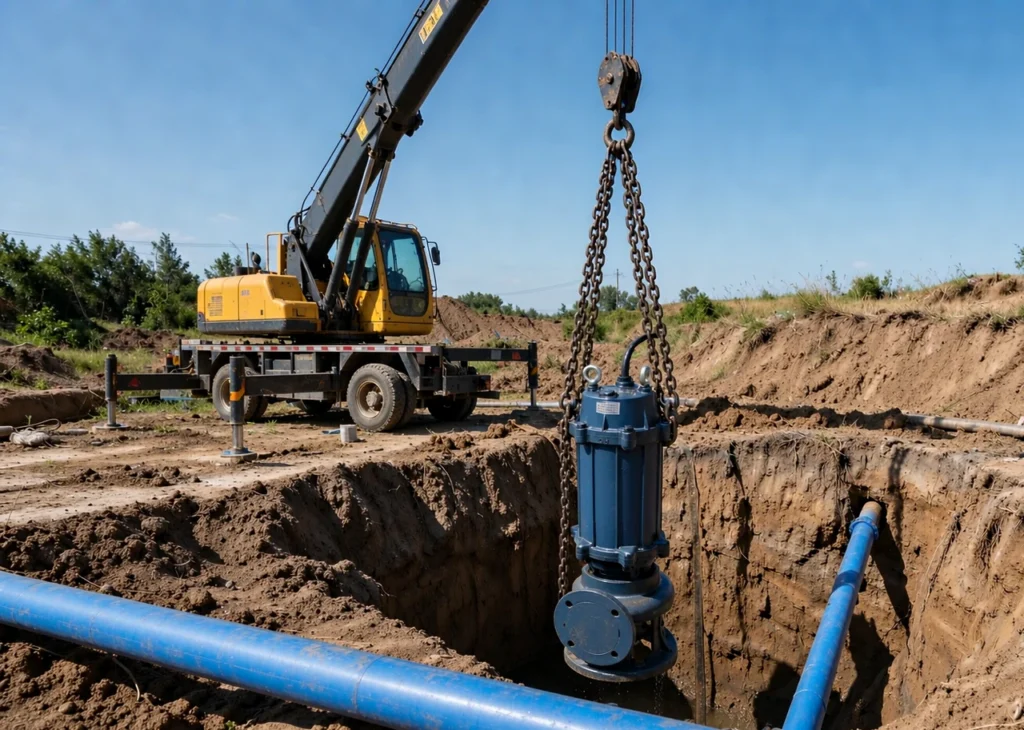
Choosing comes down to four variables your procurement or engineering team already knows: the fluid (clean water, sewage, or slurry), the solids and fiber content, the required flow and head, and the installation depth. Use this quick-check to narrow the field before you request a quote:
| Your condition | Recommended type | Next step |
|---|---|---|
| Clean groundwater from a well | Deep well submersible pump | Confirm depth & flow with our team |
| Wastewater with solids ≤50% of outlet | non-clog sewage submersible pump | Review WQ specifications |
| Fibrous sewage or slurry | cutter submersible pump | Review WQK specifications |
| Unattended, variable level | Any type with float / level control | Ask about IoT monitoring |
When you are specifying, remember the same reliability logic behind how a diesel fire pump works applies here too: equipment that starts, runs, and self-protects automatically is what protects your operation from unplanned downtime. For step-by-step setup once you have chosen, our submersible sewage pump installation guide walks through commissioning.
|
Need the Right Submersible Pump for Your Project? Send CDUN Pump your flow, head, fluid, and depth — our engineers return a matched model and material recommendation. |
FAQs
How deep can a submersible pump go?
Standard submersible sewage pumps are rated for about 20 m (66 ft) of submersion. Deep well / borehole submersible pumps are engineered for far greater depths — typically 100 m to 300 m or more — using water-jacket or fluid-filled motor cooling and narrow, pressure-rated casings. Always confirm the rated depth against your well or pit before ordering.
What is the difference between a submersible pump and a centrifugal pump?
A submersible pump is a type of centrifugal pump — it uses an impeller and volute to move fluid. The difference is placement: a submersible unit is sealed and sits inside the fluid, pushing it out under positive pressure, while a “centrifugal pump” usually means a surface unit that sucks fluid up a suction line. The submersible version avoids priming and the energy loss of suction lift.
How long does a submersible pump last?
With dual mechanical seals and correct duty, quality units deliver 8,000+ hours of continuous operation and a design lifespan of 12 or more years — roughly 40% longer than single-seal equivalents. Lifespan depends most on fluid abrasiveness, seal quality, and whether the pump runs dry. Read our guide on How Long Can a Submersible Pump Run Continuously.
Can a submersible pump run dry?
Not safely for long. Dry running overheats the seals and bearings and can destroy the motor. Float switches and leak / level protection are there to prevent exactly this. If your duty involves frequent dry periods, specify cooling and protection upgrades during selection.
What size submersible pump do I need?
Size from your required flow (m³/h), head (m), fluid type, solids content, and installation depth. A hydraulic calculation from your supplier determines the correct rating — guessing on flow or head is the most common cause of premature failure.
How do I choose between a sewage submersible pump and a cutter pump?
If the medium carries long fibers, rags, or stringy waste, a cutter (grinder) model such as the WQK prevents entanglement and clogging. For solids without heavy fibers, a non-clog channel-impeller model such as the WQ is usually sufficient and more energy-efficient. Match the impeller to what actually flows through your line.
What maintenance does a submersible pump need?
Routine checks of the seals, level controls, and cable condition are enough for most sites. Rail-coupled units let a single technician lift the pump to the surface for service without entering the pit — which is why they are preferred for sewage duty.
Conclusion
A submersible pump turns a hard problem — moving fluid from below — into a sealed, efficient, low-maintenance operation. You have seen how it works, what sits inside it, why it beats surface pumps on efficiency, the types of submersible pumps available, and how to choose the right one for your business. If you are specifying pumps for a project, CDUN Pump’s engineering team can confirm the correct model, head, and materials for your exact duty — and walk you through our full sewage pump series along the way.
|
Get a Tailored Submersible Pump Quote Tell us your fluid, flow, head, and depth. CDUN Pump returns a matched, project-ready recommendation — no generic catalog dump. |