Skip to content

When you specify a fire pump, the single decision that shapes your budget, your maintenance workload, and your resilience during an emergency is the power source. The diesel vs electric fire pump debate is not about which technology is “better” in the abstract—it is about which driver matches your site, your grid, and your risk tolerance. This guide walks you through how the two drivers work, where each one wins, and a practical checklist you can use to choose with confidence.
Whether you are an engineer, a facility manager, or a contractor buying on behalf of a client, the right call protects lives and avoids costly rework. Below, we compare both options across the factors that actually matter on a project: reliability, cost, space, compliance, and day-to-day operation.
What Is the Difference Between a Diesel and an Electric Fire Pump?
At the most basic level, both pumps move water. The difference is what turns the shaft. A diesel engine fire pump carries its own power plant: a self-contained diesel engine, fuel system, and starting batteries. An electric fire pump relies on the building’s electrical supply to spin an electric motor. That single distinction drives every other trade-off in this article.
Power Source
A diesel-driven unit is energy-independent. It does not care whether the utility grid is up or down, because it generates its own mechanical power from on-site fuel. An electric unit is only as dependable as the electrical service feeding it—plus, in many critical occupancies, the emergency generator or alternate feeder standing behind that service.
This is why the question of fire pump diesel or electric is really a question about your infrastructure: do you already have redundant, code-accepted power, or do you need the pump to stand alone when everything else fails?

Why Choose a Diesel Fire Pump?
You reach for a diesel driver when uninterrupted operation during a power loss is non-negotiable. Because the engine starts on its own batteries and runs on stored fuel, the pump keeps delivering pressure even when the grid, the transfer switch, and the emergency generator are all compromised at once.
Diesel is typically the stronger choice for:
- Remote or off-grid sites where a reliable utility feed simply does not exist.
- High-hazard and critical facilities—power plants, data centers, oil and gas, airports, and warehouses—where the cost of a failed start is catastrophic.
- Regions with frequent outages or single-fed electrical service that an AHJ (Authority Having Jurisdiction) will not accept as “reliable.”
- High flow and pressure demands where a diesel engine’s starting torque suits large-capacity or vertical-turbine configurations.
Diesel units also reduce the number of external failure points: no separate transfer switch, no dependence on generator cycling. The trade-off is that you take on fuel management, engine servicing, and weekly run-testing. If you want the detail on operation and upkeep, our guide on how a diesel fire pump works covers the start sequence, fuel system, and NFPA 25 test routine.
Why Choose an Electric Fire Pump?
An electric fire pump is the pragmatic default for any building with stable, redundant power. It is quieter, more compact, cleaner, and mechanically simpler—fewer parts to fail, fewer inspections to log, and no fuel to store or sample.
Electric is usually the better fit when:
- Your site has dual utility feeds or a properly sized emergency generator that meets NFPA 20 reliability expectations.
- You prioritize low maintenance and low operating cost over standalone resilience.
- Space and noise are constrained—pump rooms in offices, hospitals, hotels, and residential towers benefit from the smaller footprint and lower sound level.
- Environmental or indoor-air rules make diesel exhaust and fuel storage undesirable.
For most modern commercial and high-rise buildings, the electric driver paired with generator backup delivers everything the code requires at a lower total cost of ownership. The only gap is the brief transition window during a power transfer—acceptable for many occupancies, unacceptable for a few.
How to Decide: Diesel or Electric?
The cleanest way to choose is to score your site against a short checklist. Tick what matches your project, and the dominant column tells you the answer.
Quick Check: Is Diesel or Electric the Better Fit?Tick the statements that match your site: Power outages are frequent, or the grid is single-fed and unreliable. The facility is remote, off-grid, or has no practical generator backup. The occupancy is high-hazard or critical (data center, power plant, oil & gas, airport). You have dual utility feeds or a code-accepted emergency generator already in place. Limited pump-room space, low noise, and minimal maintenance are priorities. Local fire code or your insurer mandates a non-electric backup driver. Result: if most of the first three are ticked, lean diesel. If the middle two dominate, lean electric. If both columns are strong, a combined diesel-and-electric set may be the safest design. |
Choose Diesel If
- You cannot demonstrate reliable electrical supply to the AHJ.
- Fire protection must survive a total grid collapse.
- Your site is remote, industrial, or classified as high-hazard.
- Insurance or local code requires an independent driver.
Choose Electric If
- You have redundant, accepted power (dual feed or generator backup).
- You want the lowest lifecycle cost and simplest upkeep.
- Space, noise, and emissions are constraints in the pump room.
- Your occupancy is standard commercial, residential, or healthcare with stable infrastructure.
5 Factors to Compare Diesel vs Electric Fire Pumps
Use the table below as a side-by-side reference when you brief stakeholders or write a specification. The two drivers are closer than they look—the gaps that matter are reliability, cost, and compliance.
| Factor | Diesel Fire Pump | Electric Fire Pump |
|---|---|---|
| Power source | Self-contained diesel engine + on-site fuel | Building electrical supply / generator backup |
| Reliability in outage | Operates independently; no grid needed | Depends on utility + emergency power |
| Initial cost | Higher (engine, fuel tank, exhaust, ventilation) | Lower (simpler install, no fuel system) |
| Operating & maintenance | Higher (fuel, oil, batteries, weekly run test) | Lower (fewer parts, simpler testing) |
| Space & infrastructure | Larger footprint; fuel & exhaust routing | Compact; integrates with electrical room |
| Noise & emissions | Louder; exhaust requires ventilation | Quiet; no on-site emissions |
| Best-fit use | Remote, high-hazard, unreliable-grid sites | Urban/commercial with stable power |
Two more variables deserve a line in your spec sheet. First, NFPA 20 governs both driver types but treats them differently: diesel rooms always require sprinkler protection, and electric supplies must prove reliability. Second, fuel and battery discipline decides real-world diesel reliability—neglected batteries and stale fuel are the leading causes of failed starts, which is why weekly testing is not optional.
Common Mistakes When Choosing
Most specification errors come from assuming the answer instead of scoring the site. Watch for these:
- Assuming “electric is always cheaper.” If your site needs a new generator or upgraded feeders to back an electric pump, the diesel option can win on installed cost.
- Ignoring the AHJ and insurer. Your local fire marshal or property underwriter may require a non-electric driver regardless of your preference. Confirm before you buy.
- Under-sizing the diesel fuel supply. NFPA 20 sets a minimum run time; a day tank sized too small fails acceptance.
- Skipping the testing program. A diesel pump that is never run-test weekly loses its reliability advantage to dead batteries and bad fuel.
- Forgetting redundancy for critical loads. For hospitals, data centers, and airports, a combined diesel engine electric motor driven fire pump set gives you both primary and backup drivers in one package.
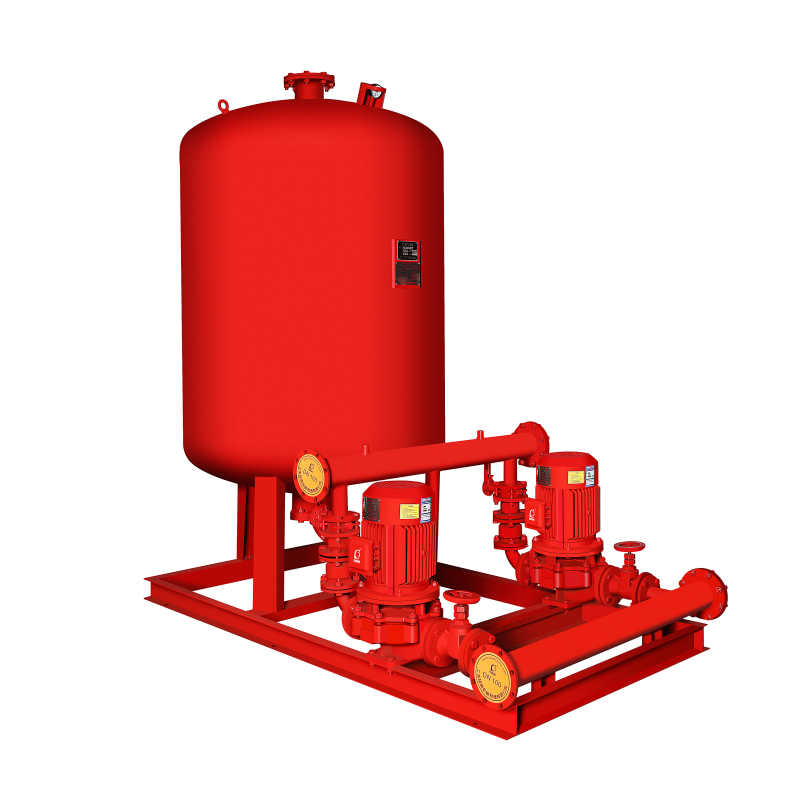
If your project also serves a smaller building or annex, our residential fire sprinkler booster pump guide explains how booster and pressure-stabilization equipment supports the same goals at a different scale.

FAQs
What is the main difference between a diesel and an electric fire pump?
The difference is the driver. A diesel fire pump runs on a self-contained engine and stored fuel, so it operates independently of the electrical grid. An electric fire pump is driven by an electric motor powered by the building supply, usually backed by a generator. That distinction decides reliability during outages, installed cost, and maintenance load.
When should you choose a diesel fire pump over an electric one?
Choose diesel when power outages are common, the grid is unreliable or single-fed, the site is remote, or the occupancy is high-hazard and cannot accept a power-transfer gap. If when to use a diesel fire pump is your question, the trigger is almost always “I cannot prove reliable electrical supply to the AHJ.” In that case the independent driver is the safer specification.
Are diesel fire pumps more expensive than electric fire pumps?
Up front, yes. A diesel unit adds an engine, fuel tank, day tank, exhaust, and ventilation, pushing initial cost higher. Over the lifecycle the math flips for sites that would otherwise need generator upgrades to back an electric pump. Electric pumps generally win on operating and maintenance cost where power is stable.
Do diesel fire pumps require more maintenance than electric fire pumps?
Yes. Diesel drivers need fuel quality checks, oil and filter changes, battery testing, cooling and exhaust inspection, and a weekly run test under NFPA 25. Electric pumps have fewer moving parts and a lighter inspection routine. The extra maintenance is the price of grid independence.
Can you use both a diesel and an electric fire pump in the same system?
Absolutely, and many critical facilities do. A combined set—electric as primary, diesel as backup—delivers maximum redundancy so a single failure never takes the system offline. This configuration is common for hospitals, airports, and data centers where uninterrupted protection is mandatory.
Does NFPA 20 require a diesel or an electric fire pump?
NFPA 20 does not mandate one driver over the other. It requires one reliable pump and defines what “reliable” means for each driver type. Electric supplies must demonstrate dependable power; diesel drivers must meet fuel, battery, and testing rules. Your AHJ and insurer—not the standard alone—often decide the final driver.
Conclusion
There is no universal winner in the diesel fire pump vs electric fire pump comparison—only the right match for your site. Score your grid, your hazard class, your space, and your code requirements, then let the dominant column decide. If resilience during a blackout is the priority, diesel earns its keep. If you already have redundant, accepted power, electric delivers the lower cost of ownership.
Still weighing the two for a live project? CDUN Pump supplies both driver types and combined diesel-and-electric sets.
Need Help Specifying Your Fire Pump Power Source?Talk to CDUN Pump’s engineering team for pump selection, flow and head calculations, and a tailored diesel or electric fire pump proposal for your project. |