Skip to content

When your water source sits far below ground — a deep well, a sump, a river intake, or an underground tank — lifting it reliably is rarely a job for a standard horizontal pump. That is where a vertical turbine pump earns its place. Built to pull from depths that would strain a submersible and to keep the motor and bearings at the surface where you can actually service them, it is the workhorse behind municipal water supply, irrigation, power-plant cooling, and fire-protection systems worldwide.
This guide walks you through exactly what a vertical turbine pump is, how it moves water step by step, how it stacks up against a submersible pump, and where it delivers the most value for your business. By the end, you will know whether it fits your project — and the selection mistakes that quietly ruin performance if you skip them.
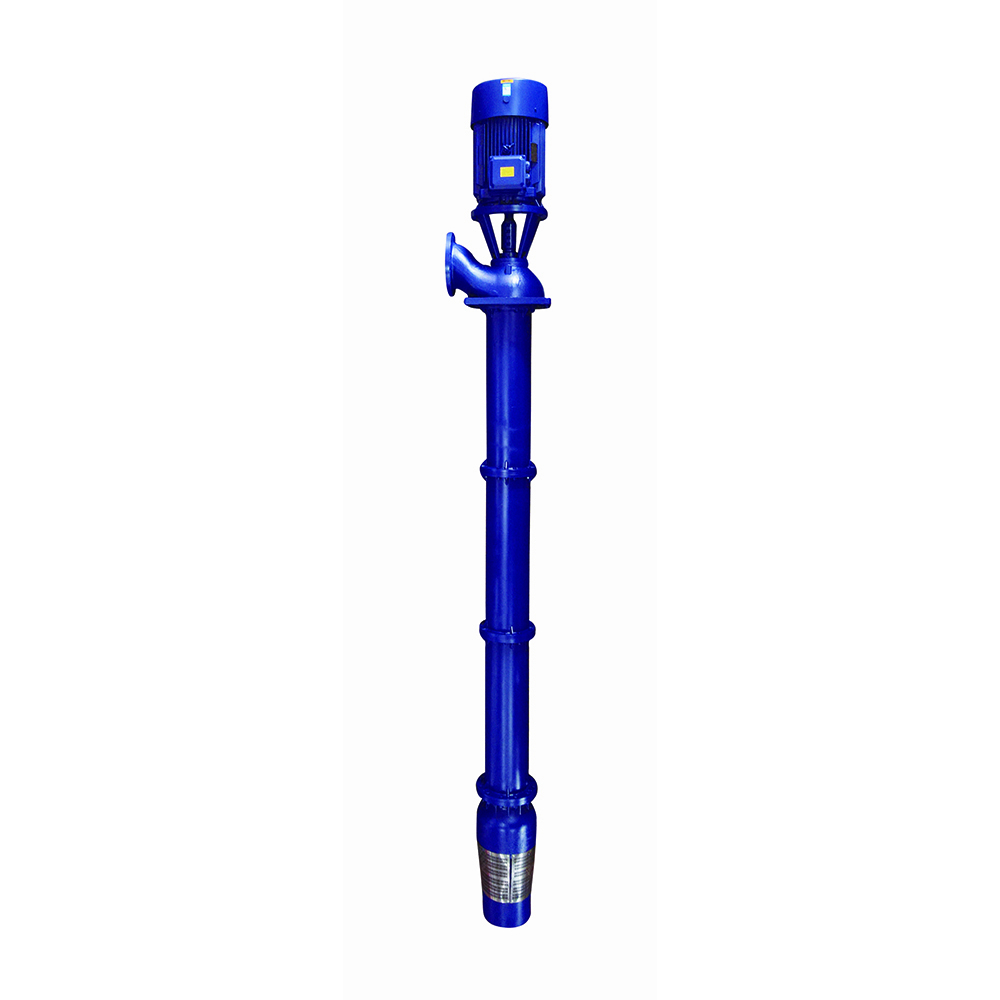
What Is a Vertical Turbine Pump?
Definition and Key Trait
A vertical turbine pump is a vertically mounted, shaft-driven centrifugal pump designed to lift water from a deep, narrow source. Instead of sitting in the water like a submersible, its bowl assembly — the stack of impellers and diffusers — hangs below the water surface while the driver (an electric motor or diesel engine) is mounted at the top, above the wellhead or tank.
That single layout decision is the pump’s defining trait: power travels down a long line shaft to submerged impellers, and water is lifted up through a column pipe to the discharge head. Because you can bolt multiple impellers in series, the pump easily reaches high heads. In the field you will also hear it called a deep well turbine pump or a long-shaft deep well pump — same machine, different wording. For higher-head, multi-stage configurations, it sits inside the broader multistage pump series family.
How It Differs From a Submersible Pump
The fastest way to separate the two: a submersible pump lives inside the water with its motor sealed below the surface; a vertical turbine pump keeps its motor above the water and reaches the water through a shaft and column. That difference drives everything else — how you service it, how deep you can go, and how it behaves when the water level drops. We compare them head-to-head further down, but the headline is serviceability: with a turbine, your motor, seals, and coupling are right there at the top.
How Does a Vertical Turbine Pump Work?
Main Parts
Every vertical turbine pump is built from the same core components. Knowing them helps you read a quotation and spot what your supplier is (or isn’t) including:
| Component | What it does |
|---|---|
| Discharge head | Sits at the top; houses the motor bracket, shaft seal, and the outlet where lifted water exits to your pipeline. |
| Bowl assembly | The submerged heart: one or more impellers plus diffusers that convert shaft power into flow and pressure. |
| Column pipe & shaft | The discharge column carries water up; the line shaft transmits torque from the driver to the impellers. |
| Bearings | Support the long shaft at intervals — often rubber or bronze in water-lubricated designs — to keep runout and vibration low. |
| Driver | An electric motor (most common) or diesel/gas engine mounted on the discharge head, sized to the required power. |
| Intake / bottom casing | The screened or open entry at the base that draws water into the first impeller without drawing in air. |
Operating Sequence (Step by Step)
Here is the path water actually takes, from the source to your pipeline:
- Prime and start. With the first impeller already submerged, the driver spins the line shaft and the bowl assembly turns immediately — no separate priming step is needed.
- First-stage suction. The bottom impeller draws water in through the intake and accelerates it outward into the first diffuser.
- Staged boost. In a multi-stage bowl, water passes from one impeller/diffuser to the next, gaining head at each stage.
- Lift through the column. The combined pressure pushes water up the column pipe toward the discharge head.
- Discharge. Water exits the head into your piping, tank, or fire-main at the designed flow and pressure.
Why Is the First Impeller Submerged?
The first impeller must stay below the minimum operating water level for two reasons. First, the pump is not self-priming: if the suction inlet draws air, the bowl loses prime and flow collapses. Second, submergence protects against cavitation — the damaging vapour bubbles that form when local pressure drops too low at the impeller eye. Keeping the inlet safely submerged maintains the net positive suction head (NPSH) the pump needs, prevents vortices that pull in air, and lets the unit ride seasonal water-level swings without losing performance.
Why Choose a Vertical Turbine Pump Over a Submersible?
Both pumps reach water deep below ground, so the choice comes down to service access, depth, and operating environment. The table below frames the trade-offs for your procurement team:
| Factor | Vertical turbine pump | Submersible pump |
|---|---|---|
| Driver location | Motor above ground — easy to inspect, couple, and repair. | Motor sealed underwater — pulling it means lifting the whole unit. |
| Serviceability | Shaft, seals, and coupling serviced at the top without dewatering the well. | Requires retrieval and a clean workshop for motor or seal work. |
| Typical lift | Excels at high heads and very deep settings (hundreds of metres). | Strong for moderate depths; cable and heat limits matter as depth grows. |
| Well straightness | Needs a straight, true well — the long shaft will show any misalignment. | More forgiving of crooked or offset wells. |
| Best fit | Deep wells, tanks, fire systems, high-lift municipal/irrigation duty. | Clean shallow–mid wells, quick installs, where retrieval is easy. |
If your concern is continuous duty and heat buildup in a deep setting, it is worth reading how long a submersible pump can run continuously before you commit — runtime and cooling limits are where the two designs diverge most.
Where Are Vertical Turbine Pumps Used? (Applications)
Because the design scales from a single stage to many, vertical turbine pump applications span almost every sector that moves large volumes of water from depth. The most common ones:
| Application | Why a vertical turbine pump fits |
|---|---|
| Municipal & community water supply | Lifts from deep wells or treated-water tanks to meet variable daily demand reliably. |
| Agricultural irrigation | High flow with stable pressure across long laterals, even as the water table drops. |
| Power plant & industrial cooling | Moves condenser cooling and process water where lift and continuity matter. |
| Fire protection | A vertical turbine fire pump draws from a ground tank or well and stages to NFPA 20 duties. |
| Mining & dewatering | Handles deep pit and shaft dewatering with robust, serviceable construction. |
For fire-water duties specifically, drawing from a below-grade tank or well lets the pump sit outside the risk area while still delivering listed flow and pressure. The structure below shows how the stages and discharge head are arranged for that service:
5 Advantages of a Vertical Turbine Pump
If you are weighing options for a deep-lift project, these are the five benefits that usually decide it:
- Efficient at high lift. Staged impellers hold efficiency across a wide operating range, so you move more water per kilowatt even at hundreds of metres of head.
- Motor stays at the surface. Inspection, coupling, and seal work happen at the top — no dewatering, no crane-out, less downtime for your business.
- Rides falling water levels. As long as submergence is maintained, the same pump keeps working through seasonal or long-term drops in the source.
- Small surface footprint. The vertical layout uses almost no floor space, which matters in plant rooms, pumphouses, and offshore or skid-mounted packages.
- Long service life with the right materials. With cast iron, 304, 316, or 316L wetted parts selected to your water chemistry, the unit runs for years in demanding conditions.
Common Mistakes When Selecting or Operating
Most vertical turbine pump failures trace back to a handful of avoidable errors. Use this quick-check before you specify:
| Your project condition | Recommended action |
|---|---|
| Water level varies a lot | Confirm minimum submergence; size the bowl depth to the lowest expected level. |
| Existing or crooked well | Check well straightness first — a misaligned shaft means vibration and bearing wear. |
| Corrosive or sandy water | Specify 316/316L and an oil-lubricated shaft system; don’t run standard bronze on abrasives. |
| Shallow, low-head duty | A single-stage pump series unit is often the cheaper, simpler fit. |
| Unknown flow & head | Share dynamic water level, pipe losses, and pressure needs — don’t size on nameplate flow alone. |
The biggest trap is sizing on flow and head only. As our deeper guide on why pump selection should not be based only on flow and head explains, ignoring suction conditions and system losses is what pushes a pump off its efficient curve.
FAQs
What is a vertical turbine pump used for?
It is used to lift large volumes of water from deep wells, tanks, rivers, or sumps for municipal supply, irrigation, industrial cooling, process water, mining dewatering, and fire protection. Its vertical, shaft-driven design makes it the practical choice whenever the source sits well below the discharge point.
How deep can a vertical turbine pump lift water?
Depth is set by how many impeller stages you stack and the shaft length.CDUN’s vertical shaft turbine pumps are built for flows up to 1200 m³/h and heads up to 250 m.
Vertical turbine pump vs submersible: which should I choose?
Choose a vertical turbine pump when you need deep, high-head, or continuous duty with easy surface service access — especially from tanks, fire systems, or straight deep wells. Choose a submersible when the well is shallow-to-mid depth, retrieval is easy, and a compact submerged unit is simpler to install. The comparison table above breaks down the trade-offs.
Do I need a straight well for a vertical turbine pump?
Yes. The long line shaft must run true inside the column, so a crooked or offset well causes shaft misalignment, vibration, bearing wear, and noise. Check vertical alignment and well straightness before installation — it is one of the most common causes of early failure.
What materials are vertical turbine pumps made from?
Wetted parts are typically cast iron, ductile iron, or stainless steel grades such as 304, 316, or 316L, selected to the liquid’s corrosiveness, chloride content, and solids. For poor water quality or deep, hard-to-lubricate settings, an oil-lubricated enclosed shaft system is the safer specification.
How do I size a vertical turbine pump for my project?
Start from the required flow, the dynamic (lowest) water level, pipeline friction losses, and the system pressure you must deliver. From there, the number of stages and shaft length follow. The most reliable route is to share those figures with a pump engineer so the bowl is matched to its high-efficiency range rather than guessed.
Conclusion
A vertical turbine pump is the right answer when you need to lift water reliably from depth without burying your motor and maintenance below the waterline. You now know what it is, how it works stage by stage, how it compares with a submersible, and where it pays off across vertical turbine pump applications — plus the selection mistakes that are easy to avoid.
| Need a vertical turbine pump sized for your well or tank? Send us your flow, head, and water-level data and get a tailored quotation with the right stage count, materials, and driver for your project. |
| Exploring other high-head options? Browse related multi-stage and single-stage configurations to compare footprints, efficiency, and price for your specification. |