
If your plant runs a steam boiler, the multistage boiler feed water pump is the component you cannot afford to get wrong. It pushes treated feedwater from the deaerator into a boiler drum that may be operating at 10, 40, or even 100+ bar, so the pump has to deliver both high pressure and rock-steady flow, shift after shift. In this guide we walk you through what this pump is, where it sits in your boiler feed water system, how it builds pressure, and—most importantly—how to size and select one that matches your boiler instead of guessing. By the end, your engineering or procurement team will have a practical checklist you can hand straight to a supplier.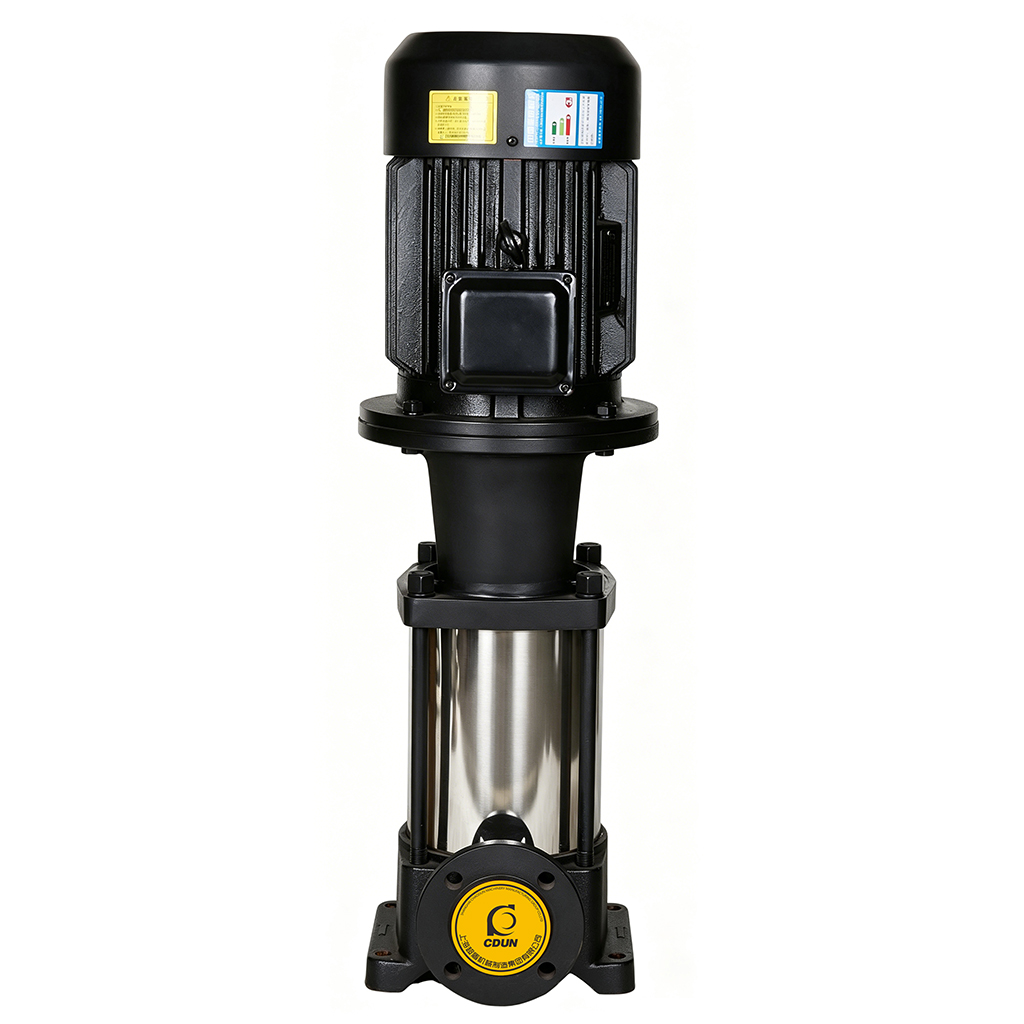
What Is a Multistage Boiler Feed Water Pump?
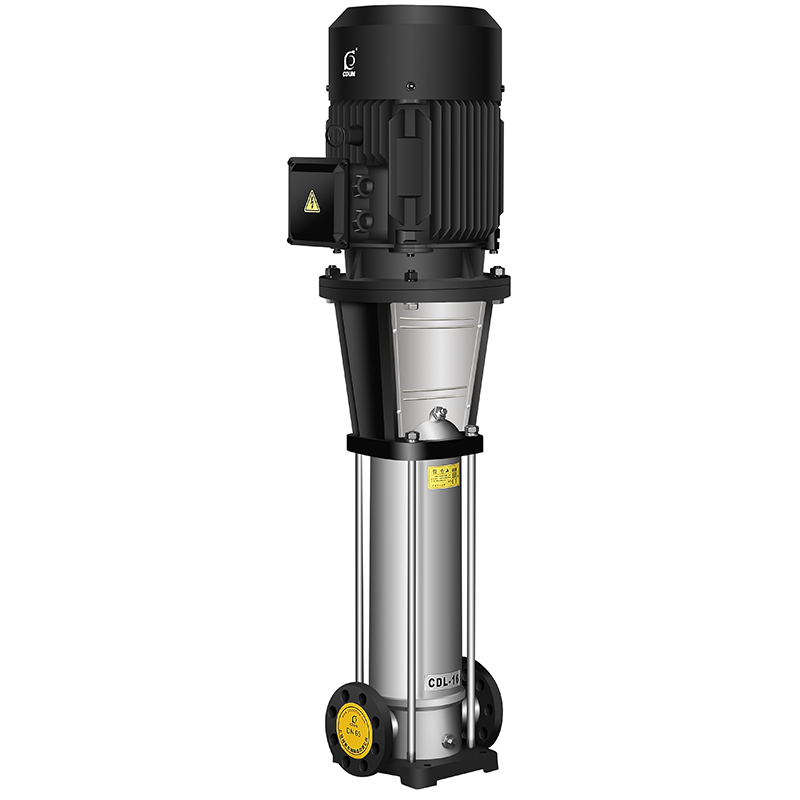
In plain terms, a multistage boiler feed water pump is a centrifugal pump that stacks several impellers in series along a single shaft. Each impeller—or “stage”—adds a slice of pressure; line them up and you reach the high discharge head a boiler drum demands without resorting to one oversized, hard-to-balance impeller. Because feedwater is clean, low-viscosity, and often hot, most plants choose a vertical multistage stainless steel centrifugal pump built for exactly this duty.
Unlike a garden-variety boiler feed water pump that only has to top up a low-pressure loop, a true multistage unit is a precision machine. The CDLF series, for example, is engineered for boiler feedwater, industrial pure water, and high-head transfer—rated for flow from 1 to 500 m³/h and head up to 300 m, with a hot-water variant rated to 105 °C. When your drum pressure climbs, that stacking of stages is what keeps efficiency and reliability on your side.
Where Does the Feed Pump Sit in a Boiler Feed Water System?
A boiler feed water system is a chain, and the pump is the link that does the heavy lifting. Here is the path your water travels before it ever becomes steam:
- Condensate return & makeup water – recovered steam condensate plus treated makeup water enters the cycle.
- Deaerator – this vessel strips dissolved oxygen and pre-heats the water to roughly 105 °C at near-atmospheric pressure, which is what protects your boiler from corrosion.
- Deaerator feed pump (your boiler feed pump) – it takes the de-aerated, pre-heated water and forces it uphill—in pressure—into the drum.
- Boiler drum – the high-pressure destination where water turns to steam.
In most layouts the deaerator feed pump and the boiler feed pump are the same machine. It sits just downstream of the deaerator and is sized for the worst-case pressure gap between the deaerator and the drum—plus the static lift and every metre of pipe and valve loss in between.
What Makes Boiler Feed Water Different From Ordinary Water?
You cannot spec a boiler feed pump like you would a cooling-water pump, because the fluid it handles behaves very differently:
- It is hot. Water leaving the deaerator is already near 105 °C, and it gets hotter toward the drum. Hot water has a high vapour pressure, which directly eats into the boiler feed pump NPSH margin your pump can rely on.
- It is oxygen-sensitive. Residual O₂ is the enemy of boilers, so the system is built to keep it out—and your materials must not introduce it back through corrosion.
- It can be mildly corrosive. Treatment chemicals, condensate return, and chlorides all shift the material equation.
- It demands tight pressure control. Drum level swings cause load changes, so the pump must hold flow without hunting.
That combination—high temperature, high pressure, and corrosion awareness—is exactly why a multistage centrifugal pump in the right material is the default answer for boiler feed duty.
Single-Stage vs Multistage: The 80 m Head Rule
One of the first multistage pump selection questions your team will face is simply: do I even need multiple stages? The short answer comes down to head.
When a single impeller is enough (head below ~80–100 m)
A single centrifugal impeller typically delivers somewhere around 50–80 m of head at its best-efficiency point. If your drum pressure plus losses lands below roughly 80–100 m, a single-stage pump is simpler, cheaper, and easier to maintain. If your duty is in this band, our single-stage centrifugal pump guide walks you through that choice in detail.
Why multistage wins as head climbs toward drum pressure
The moment your required head pushes past ~100 m, a single impeller has to spin faster, demands more NPSH, loads the shaft harder, and loses efficiency. Stacking stages lets each impeller stay in its sweet spot while the pressures add up—so a high pressure boiler feed pump reaching 200–1000+ m of head stays efficient and mechanically sane. That is the core reason boiler feed duty almost always lands on the multistage side.
| Criterion | Single-stage pump | Multistage boiler feed pump |
|---|---|---|
| Typical head range | Up to ~80–100 m | 100 m up to 1000+ m |
| Efficiency at high head | Drops sharply past BEP | Stays high across stages |
| NPSH requirement | Rises with speed | Better controlled per stage |
| Footprint | Compact | Vertical inline saves floor space |
| Best use | Low-head loops, clean water | Boiler feed, high-pressure transfer |
How Does a Multistage Pump Build Pressure?
The boiler feed pump working principle is straightforward centrifugal physics, repeated. Inside the casing, each impeller flings water outward with its vanes, converting motor speed into kinetic energy. A surrounding diffuser then slows that fast-moving water and converts the velocity into pressure. The pressurized water is handed to the next impeller, which adds another pressure step, and so on down the stack.
Because every stage contributes a predictable increment, a multistage centrifugal pump reaches high discharge pressure with moderate speed per stage—keeping the shaft, seals, and bearings within safe limits. That is why this design, rather than a single heroic impeller, is the workhorse behind reliable boiler feed.
What Head and Flow Does YOUR Boiler Need?
Before you talk to any supplier, your team should pin down two numbers. The boiler feed pump capacity calculation is easier than it looks:
- Flow (capacity). Size the pump at roughly 1.03–1.05 × your boiler’s continuous evaporation. Because 1 t/h of steam ≈ 1 m³/h of feedwater, a 20 t/h boiler needs about 21 m³/h of pump flow to cover normal losses and blowdown.
- Head. Estimate it as: (drum pressure − deaerator pressure) ÷ (ρ × g) + static lift + pipe/valve losses + an NPSH safety margin. A 40-bar drum fed from a ~0.1-bar deaerator implies roughly 400 m of hydraulic head before you even add losses.
When duty points toward 150 m and above, you are firmly in high pressure boiler feed pump territory—exactly where a multistage design earns its keep. The quick-reference box below turns those formulas into a planning table you can use today.
Boiler Feed Pump Sizing Quick-Reference
Flow rule: Q_pump ≈ 1.05 × boiler evaporation (t/h) → same number in m³/h. Head rule: H ≈ (P_drum − P_deaerator) ÷ (ρ·g) + lift + losses + NPSH margin.
Worked example: a 10 t/h boiler at 25 bar drum pressure, deaerator at 0.1 bar, 8 m lift, 12 m losses → flow ≈ 10.5 m³/h; head ≈ (2,500,000 − 10,000) ÷ (950 × 9.81) + 8 + 12 + 5 ≈ 283 m.
| Boiler evaporation (t/h) | Feed pump flow (m³/h) | Indicative head by duty* |
|---|---|---|
| 2 | ~2.1 | 80–150 m (low-pressure drum) |
| 10 | ~10.5 | 250–350 m (mid-pressure drum) |
| 50 | ~52.5 | 400–700 m (high-pressure drum) |
| 100 | ~105 | 600–1000+ m (utility-scale) |
|
Not sure which multistage pump fits your drum pressure? Send us your boiler capacity, drum pressure, and feedwater temperature. Our engineers return a sized proposal. |
How to Choose the Right Multistage Boiler Feed Water Pump
With your duty point known, run through this multistage pump selection checklist with your supplier:
- 1. Confirm flow & head from the calculation above—and add ~5–10 % margin so you are not running at the very edge of the curve.
- 2. Check NPSH. Hot feedwater has high vapour pressure, so verify available NPSH against the pump’s required NPSH with a safety margin. This is the single most common cause of cavitation in a boiler feed pump NPSH limited installation.
- 3. Pick the material. See the material table below—this is where boiler feed pump material selection protects both your boiler and your budget.
- 4. Match the temperature. Standard seals suit up to 70 °C; specify high-temperature mechanical seals (and a hot-water variant) for the 105 °C deaerator outlet.
- 5. Choose the standard. For refineries and severe duty you may need an API 610 boiler feed pump; for general industrial and utility boiler feed, ISO 5199 / GB/T 5657 / JB/T 2727 compliant designs are the practical norm.
- 6. Decide vertical vs horizontal. A vertical inline multistage pump (rated to 2.5 MPa) saves floor space and piping; horizontal designs win on serviceability for very large flows.
| Feedwater condition | Recommended wetted-part material | Why |
|---|---|---|
| Clean, non-corrosive | 304 stainless steel | Cost-effective, corrosion-resistant for treated water |
| Mildly corrosive / chlorides | 316 / 316L stainless steel | Better pitting resistance in chloride environments |
| High chloride / seawater-adjacent | Duplex 2205 | High strength + superior chloride resistance |
| Strong acid / alkali | PTFE-lined / special alloy | Chemical inertness for aggressive media |
If you want to compare the full family—including the vertical multistage pump (CDL series) and horizontal options—start from the multistage pump series overview.
How to Maintain a Multistage Feed Pump
A disciplined boiler feed pump maintenance plan is what turns a good specification into a ten-year asset. Build these checks into your routine:
- Watch vibration & bearing temperature – rising values are the earliest warning of misalignment or wear.
- Inspect the mechanical seal – a slight weep is normal; a steady leak means it is time to service. Back-pull-out designs let one technician do this without breaking the piping.
- Guard against cavitation – if you hear a gravel-like noise or see pressure dips, re-check your boiler feed pump NPSH margin and suction conditions.
- Track wear rings & impellers – recirculation through worn clearances quietly bleeds efficiency; schedule proactive replacement.
- Verify alignment & lubrication after any coupling work, and keep a spare seal kit on the shelf.
Good boiler feed pump troubleshooting starts with the basics: low discharge pressure usually points to worn rings, air in the suction, or cavitation; high motor current suggests a closed discharge valve or oversized impeller. Catch these early and your feedwater pump for boiler duty stays boringly reliable.
FAQs
What is the working principle of a multistage boiler feed pump?
A multistage boiler feed pump uses several impellers mounted in series on one shaft. Each impeller accelerates the water, and a diffuser converts that velocity into pressure before passing it to the next stage. The pressures add up stage by stage, so the pump reaches high discharge head with moderate speed per impeller—ideal for feeding high-pressure boiler drums.
How do I calculate boiler feed pump capacity (flow)?
Size the pump at about 1.03–1.05 times your boiler’s continuous evaporation rate. Since 1 tonne per hour of steam requires roughly 1 m³/h of feedwater, a 20 t/h boiler needs around 21 m³/h of pump capacity to cover normal losses and blowdown. Always add a small margin so you are not running at the extreme end of the curve.
What NPSH margin does a boiler feed pump need?
Because feedwater is hot, its vapour pressure is high and the available NPSH is tight. As a practical rule, keep at least 1–1.5 m of NPSH margin above the pump’s required NPSH, and more if suction conditions are unfavourable. Insufficient margin is the leading cause of cavitation and seal failure in boiler feed duty.
Which material should I choose for boiler feed water?
For clean, non-corrosive treated water, 304 stainless steel is the economical default. Where chlorides or mild corrosives are present, move to 316/316L; for high-chloride or seawater-adjacent service, duplex 2205 is preferred; and for strong acids or alkalis, specify PTFE-lined or special-alloy wetted parts. Matching the material to your feedwater is the core of boiler feed pump material selection.
Do I need an API 610 boiler feed pump, or is a standard pump enough?
API 610 is the specification for severe-duty, often refinery or high-temperature/high-pressure services with strict reliability and documentation requirements. For most industrial and utility boiler feed applications, a pump built to ISO 5199, GB/T 5657-2013, or JB/T 2727—such as CDUN’s multistage series—is the practical, cost-effective choice. Specify API 610 only when your plant standard or duty severity truly demands it.
Single-stage or multistage—which does my boiler need?
If your total required head (drum pressure, lift, and losses) is below roughly 80–100 m, a single-stage pump is simpler and cheaper. Once head climbs toward drum pressure—typically 150 m and above—a multistage design wins on efficiency, NPSH behaviour, and mechanical load. Most boiler feed duties fall into the multistage category.
How do I maintain and troubleshoot a multistage boiler feed pump?
Monitor vibration and bearing temperature, inspect the mechanical seal, and protect the NPSH margin to avoid cavitation. Low discharge pressure usually signals worn wear rings, air in the suction, or cavitation; high motor current often means a closed discharge valve or oversized impeller. A back-pull-out design lets a single technician service seals and bearings without disconnecting the piping.
Conclusion
Choosing the right multistage boiler feed water pump comes down to three numbers—flow, head, and NPSH—plus a material choice that respects your feedwater. Get those right and the rest of your boiler feed water system runs quietly for years.
|
Ready to spec your boiler feed pump? Browse the full multistage range, or send us your boiler data and get a sized recommendation from CDUN’s engineering team. |